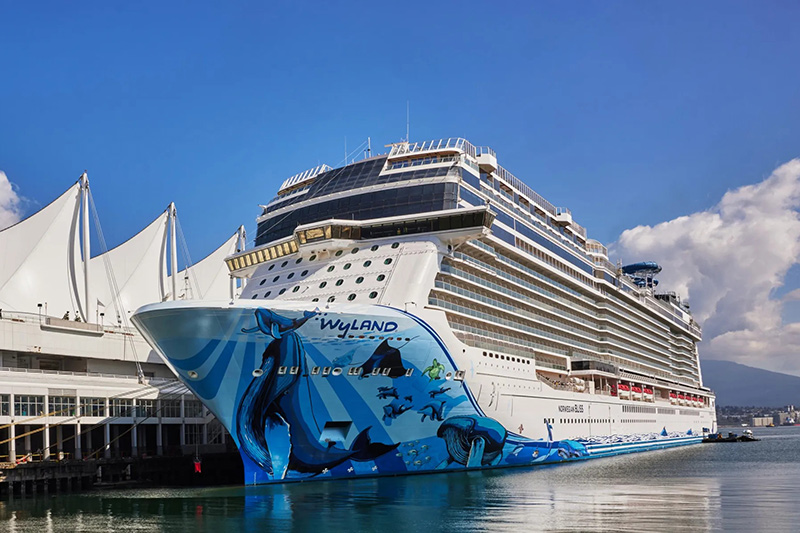
The Vancouver Fraser Port Authority said that average embarkation times for passengers boarding a cruise ship in Vancouver has shrunk to under 30 minutes in 2026.
According to a press release, the milestone was reached after the introduction of facial biometric scanning, which allowed for more efficient operations.
Introduced during the 2024 season, the biometric process was said to cut the time it takes most passengers to pass through U.S. border control to less than ten seconds, a 94 percent reduction.
The Port of Vancouver also celebrated the one millionth cruise passenger going through the biometric embarkation system in 2026.
The mark was triggered by the Fullerton family, which embarked on a cruise to Alaska at the Canada Place Cruise Terminal in June.
At the time, the Vancouver Fraser Port Authority said that it is the only port to use facial biometrics for embarkations.
Calling the technology “a total game changer for the passenger experience,” the port said that it previously used automated passport control kiosks.
When the previous system was in place, the process used to take around two to three minutes for each cruise passenger.
“So, it has significantly improved the overall passenger journey. While the whole embarkation process would take around two hours, we have brought it down to around 30 minutes,” Chance McKee, senior trade development account representative for the Port of Vancouver, said at the time.
The Norwegian Encore closed the 2026 cruise season in Vancouver earlier this month, marking the end of a record-breaking schedule.
The port recorded 358 calls between February and October, a 19 percent increase compared to the previous season.
The number of passengers arriving also grew by 18 percent, with 1.4 million guests welcomed during that timeframe.
Other highlights of the season included a partnership with the federal government through Transport Canada’s Green Shipping Corridors Program to expand shore power at Canada Place.
According to the port authority, about 80 percent of the visiting vessels in 2026 were able to plug into B.C.’s low-emission, hydro-powered electrical grid while at berth.