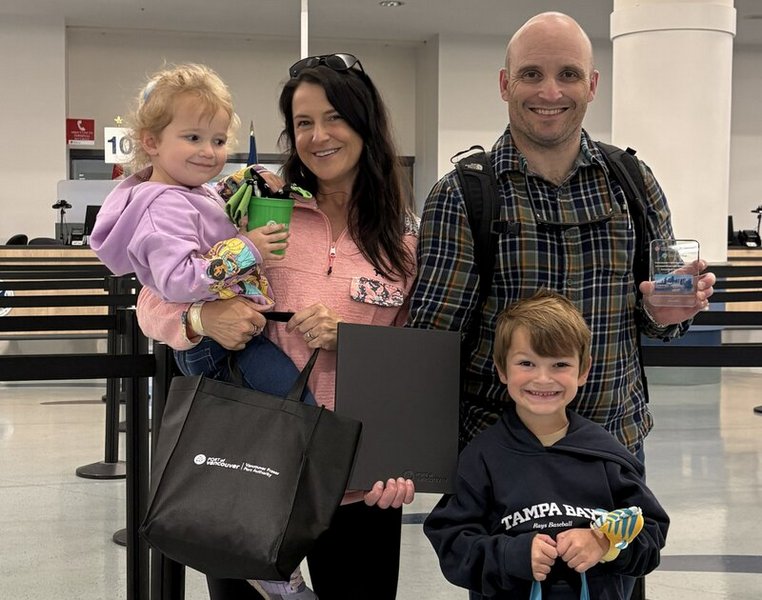
The Port of Vancouver celebrated the one millionth cruise passenger going through its unique facial biometric embarkation system today.
The Fullerton family triggered the one-million mark. They were traveling from Kentucky to board their Alaska-bound cruise ship.
Facial biometrics were first implemented at the Canada Place Cruise Terminal in June 2024, just as the Alaska season was starting to ramp up. As the only port to use facial biometrics for embarkations, it has been a total game changer for the passenger experience at the cruise terminal, according to Chance McKee, senior trade development account representative for the Port of Vancouver.
“Previously, we used automated passport control kiosks, but since the implementation of facial biometrics, we have seen the average processing time per passenger through U.S. Customs and Border Protection reduced by about 94 percent.
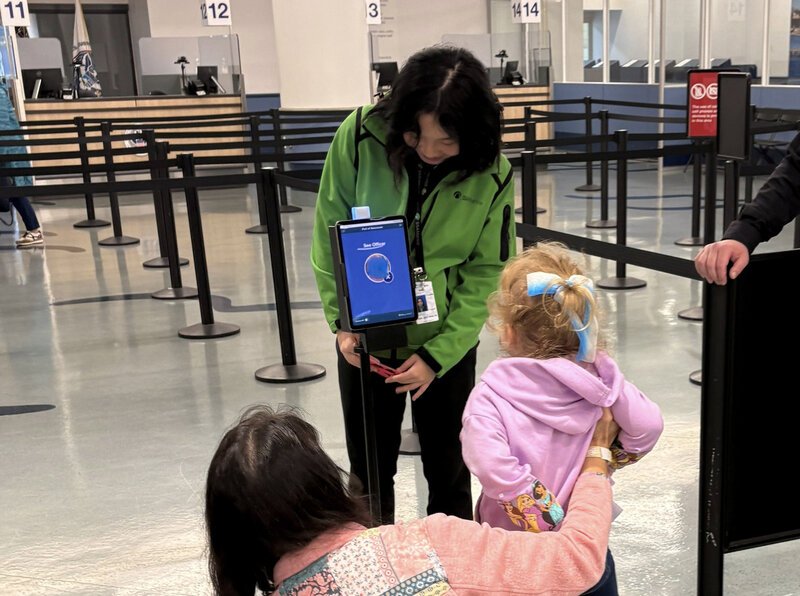
“It used to take around two to three minutes for each cruise passenger to pass through U.S. Customs and Border Protection, but now it takes about 10 seconds per passenger. So, it has significantly improved the overall passenger journey. While the whole embarkation process would take around two hours, we have brought it down to around 30 minutes.”
That speed is important as the cruise sector continues to grow in Vancouver with 357 calls and 1.4 million passengers expected this season.
“We typically use four stations each day, although we have 12 tables available for peak periods, making sure that the ships can leave on time on a peak day.
“When we have three vessels, we typically see about an average of 1,000 passengers being processed hourly during that 11 a.m. to 1 p.m. window.”
There is also staff present to guide and assist passengers.
Explained McKee: “Staff is there to remind passengers to remove their hats and glasses, and they can adjust the height of the tablets.
“We also have an instructional video that plays right before passengers enter the area, which also prepares them for how to go through the facial biometric process. It is just a kind of heads up for what to expect as they step up to the tablets.”
McKee said that since its 2024 implementation, it has been a smooth process.
“It (facial biometrics) has increased our overall efficiency. It has improved border protection, and it has increased and enhanced the overall passenger experience.
“So, from our perspective, from the passenger perspective, from the cruise line perspective and from the U.S. Customs and Border Protection perspective, it has been really positive all the way around.
“Being able to implement new technologies, like facial biometrics, we are able to ensure that the passenger experience is as efficient and enjoyable as possible,” McKee added.
“It also needs to be said that initiatives like this come about by industry and government partnering together.”
Photos: The Fullerton family from Kentucky. Lowering the tablet for the younger passengers.