Aurora Expeditions has announced the expansion of its partnership with CounterCurrent.
Following an Antarctic trial of its AI-powered ocean forecasting technology aboard the Douglas Mawson during the 2025-26 Antarctic season, the technology has now been deployed to the Sylvia Earle and Greg Mortimer as well.
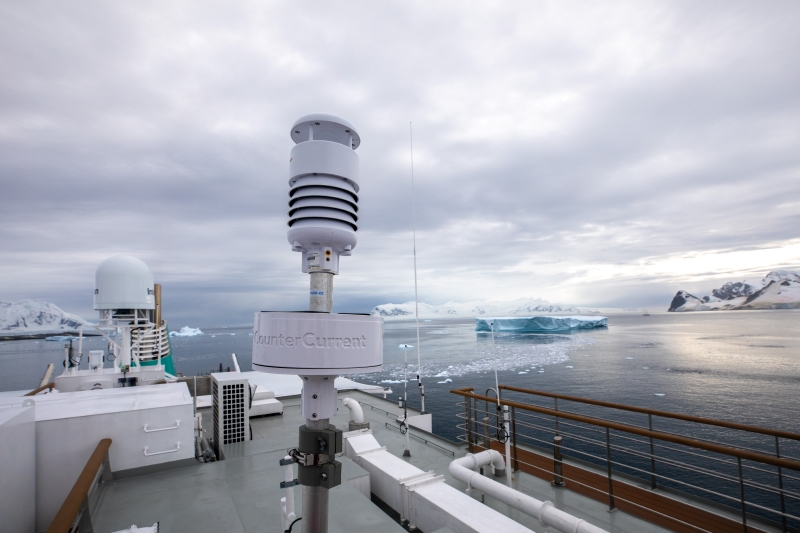
The ships feature the upgraded CounterCurrent Mark 3 Triton sensors, supporting more reliable data collection in remote regions, including during periods without sunlight or satellite connectivity, the cruise line said in a press release.
“At Aurora Expeditions, we’ve spent more than 35 years exploring some of the world’s most remote environments, and we recognize the responsibility that comes with operating in these extraordinary places,” said Sasha Buch, Aurora Expeditions head of sustainability and passenger experience.
“Partnerships like CounterCurrent allow us to explore ways to make our operations more efficient, while contributing real-world insights that can help advance technology for the wider maritime industry. By testing these innovations in Antarctica, we’re supporting practical solutions with the potential to deliver environmental benefits.”
Data collected during the trial helped deliver 39 route recommendations, collecting more than 5,600 environmental observations over 126 days of operation.
Early sea trials have indicated fuel savings of more than 2–5 percent over 24 hours, while preliminary modeling suggests potential savings of up to 5–15 percent in suitable conditions, depending on vessel type, operating speed and route.
These findings remain preliminary, with further testing required to validate longer-term performance, Aurora noted.
Described by CounterCurrent founder Professor Shane Keating as “Google Maps for the Sea”, the technology combines AI-driven forecasting, ship-mounted sensors and real-time ocean observations to identify more efficient routes through dynamic ocean currents, without necessarily increasing journey times.
According to Aurora Expeditions, the next phase will explore fleet-wide forecasting, allowing observations from one vessel to help improve forecasts and route recommendations for others operating in the same region.
The partnership also supports development of onboard forecasting that could reduce reliance on cloud-based processing.