
Skip to content
  • Home
  • Search
  • 2026 Expedition Report
  • Drydock Report
  • Orderbook
  • Research
  • About Us
  • Email News
  • Advertise
  • Store
  • Contact
  • Home
  • Search
  • 2026 Expedition Report
  • Drydock Report
  • Orderbook
  • Research
  • About Us
  • Email News
  • Advertise
  • Store
  • Contact
Twitter Facebook Linkedin
cin header 2025
Cruise Industry News Logo
  • Home
  • Cruise News
    • Cruise News Index
    • Email Alerts | E-Newsletter
    • Cruise Ship Orderbook
    • Ship Sales and Transfers
    • Search
    • Trade Shows and Events
    • PDF Resources
    • Historical Data
  • Quarterly Magazine
    • Quarterly Magazine
    • Feature Magazine Articles
    • Subscribe
  • 2026 Annual Report
    • 2026 Annual Report
    • River Report
    • Full Product Package
  • 2026 Executive Guide
    • 2026 Executive Guide
  • Digital Reports
    • Global Cruise Ship Index
    • Expedition Market Report
    • Secondhand Market
    • Luxury Market Report
    • Drydocking and Refurb
    • Orderbook Capacity Data
    • Euro River Market Report
    • China Market Report
    • Riverboat Index
    • Full Product Package
  • SUBSCRIBE
  • Home
  • Cruise News
    • Cruise News Index
    • Email Alerts | E-Newsletter
    • Cruise Ship Orderbook
    • Ship Sales and Transfers
    • Search
    • Trade Shows and Events
    • PDF Resources
    • Historical Data
  • Quarterly Magazine
    • Quarterly Magazine
    • Feature Magazine Articles
    • Subscribe
  • 2026 Annual Report
    • 2026 Annual Report
    • River Report
    • Full Product Package
  • 2026 Executive Guide
    • 2026 Executive Guide
  • Digital Reports
    • Global Cruise Ship Index
    • Expedition Market Report
    • Secondhand Market
    • Luxury Market Report
    • Drydocking and Refurb
    • Orderbook Capacity Data
    • Euro River Market Report
    • China Market Report
    • Riverboat Index
    • Full Product Package
  • SUBSCRIBE

LNG: Critical Aspects

  • December 30, 2015

LNG ConnectionLNG-fueled cruise ships are not a challenge technically, but may be deployment-wise, according to Helge Hermundsgard, business development manager for DNV GL. He said that as long as a bunkering infrastructure is not in place, LNG-fueled cruise ships are limited to itineraries where bunkering will be available.

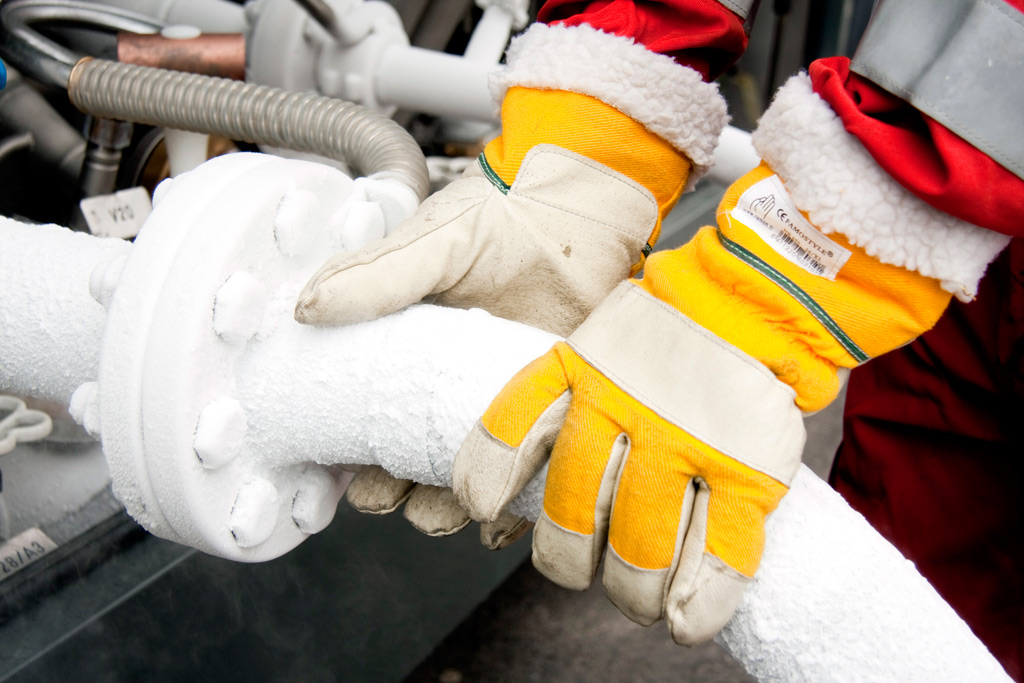
Not only is the bunkering availability today missing (apart from Northern Europe), the process itself is critical, said Martial Claudepierre, LNG business development manager for Bureau Veritas Marine and Offshore. If LNG leaks, being a cryogene liquid at minus 162 degrees Centigrade, it can make hull plates so brittle they can crack.

As LNG has been transported and burnt as a fuel by cargo ships for many decades, the risks are well understood, according to Edward Fort, global head of engineering systems for Lloyd’s Register (LR). He also said the bunkering process would be critical, primarily because it will involve many interfaces off the ship with different entities such as port and fire authorities, and others.

“When most people hear the word gas, they associate the risk with flammability,” added Mathias Jansson, general manager of innovation and product support for Wartsila. “But the real challenge is the coldness and what that can do to the steel.” The risk to human beings is also mainly the coldness, which can cause cold burns on contact.

Once LNG leaks, it will form a pool of liquid, which will quickly start to evaporate and rise up as it is lighter than air. The vapor cloud can ignite, if there is a source of ignition, but it will not explode, unless contained, and will dissipate outside.

There are horizontal and vertical safety zones around the bunkering areas on cruise ferries, intended to eliminate possible sources of ignition. Monitoring systems are also in place to detect any leakage during bunkering, and there are emergency shut-down systems.

At Viking Line, Kari Gronberg, manager of project and technical development, said the Viking Grace imposes a 25-meter safety zone, the same as for other fuels. However, the height of the zone is unlimited with no air intakes or possible ignition sources.

The technology is well-established, according to Wartsila’s Jansson who said that all the components existed prior to using LNG as fuel at sea – from the vacuum insulated tanks to the cryogenic valves and heat exchangers. It was a just a matter of taking land-based technology and putting it on a ship.

For cruise lines, he said that they need to consider both pressurized C-type tanks and atmospheric B-type tanks. The latter are lighter and offer more volume, but can withstand less pressure. while the C-type tanks are not very space efficient.

At Cryo in Sweden, Ulrich Lauster, head of business development and sales, explained the different tank systems used for LNG. A Tallink cruise ferry being built at Meyer Turku Shipyard will have two C-type tanks holding up to 300 cubic meters of LNG each, compared to AIDA’s and Costa’s new ships, which will have three tanks holding up to 3,500 cubic meters in total.

On the ferry, to maintain tank pressure in order to feed the engines, some of the LNG will be taken out at the bottom of the tank and moved through a vaporizer, expanding 600 times, before being fed back into the top of the tank as gas to maintain pressure. At the same time, LNG will also be going to the engines, but first vaporized and heated to 30 degrees Centigrade.

The bigger tanks, aboard AIDA and Costa, will have submerged pumps feeding LNG to the engines instead of having to maintain tank pressure with a gas mix. The C-type tanks consist of an inside tank of stainless steel surrounded by vacuum insulation with perlite and an outside stainless steel tank.

Operating safely comes down to having a heightened safety culture. “It is important to follow procedures as strictly as you would in a nuclear powerplant,” said DNV GL’s Hermundsgard. “LNG storage and use as a fuel require more attention to procedures and there is less room for forgiveness if anything goes wrong.”

Among the many positive aspects, what comes out of the funnel is clean, the engine room will be cleaner, and the maintenance costs will be less. In general, medium- and high-speed engines should meet Tier III requirements for NOX without exhaust after treatment, according to LR’s Fort.

“Carnival is setting the stake in the ground for future-proofing their vessels,” he added.

Meanwhile, according to LR’s Global Fuel Forecast, fuel oils will continue to be the predominant fuel for shipping through 2030, with LNG fueling up to 11 percent of the world fleet by then.

Excerpt from Cruise Industry News Quarterly Magazine: Winter 2015/2016
Cruise Industry News Email Alerts


  • Cruise News
  • Magazine Subscription
  • Email Newsletter
  • Search
  • Cruise News
  • Magazine Subscription
  • Email Newsletter
  • Search
  1. Cruise Industry News
  2. Articles
  3. Winter 2015/2016
  4. LNG: Critical Aspects
EMAIL NEWSLETTER

Get the latest breaking cruise news. Sign up.

CRUISE SHIP ORDERBOOK

80 Ships | 227,504 Berths | $87 Billion | View

Drydock Report
2026 Drydock Report

Highlights:

  • Full Overview
  • Record Refit Year
  • 26-27-28 Schedule
  • PDF Download
  • Order Today
2026 Executive Guide

Highlights:

  • All Brands
  • Decision Makers
  • Contact Info
  • Brand Background 
  • Instant Download
  • Order Today
Cruise Industry News
  • Advertising
  • About
  • Contact
Online News
  • Cruise News
  • Feature Magazine Articles
  • Orderbook
  • Events
Publications
  • Quarterly Magazine
  • Annual Report
  • Email Newsletter
  • Executive Guide
  • Digital Reports
Connect
  • Search
  • Facebook
  • Twitter
  • LinkedIn
© Cruise Industry News 1996-2026. All Rights Reserved.
We use cookies on our website to give you the most relevant experience by remembering your preferences and repeat visits. By clicking “Accept All”, you consent to the use of ALL the cookies. However, you may visit "Cookie Settings" to provide a controlled consent.
Cookie SettingsAccept All
Manage consent

Privacy Overview

This website uses cookies to improve your experience while you navigate through the website. Out of these, the cookies that are categorized as necessary are stored on your browser as they are essential for the working of basic functionalities of the website. We also use third-party cookies that help us analyze and understand how you use this website. These cookies will be stored in your browser only with your consent. You also have the option to opt-out of these cookies. But opting out of some of these cookies may affect your browsing experience.
Necessary
Always Enabled
Necessary cookies are absolutely essential for the website to function properly. These cookies ensure basic functionalities and security features of the website, anonymously.
CookieDurationDescription
cookielawinfo-checkbox-analytics11 monthsThis cookie is set by GDPR Cookie Consent plugin. The cookie is used to store the user consent for the cookies in the category "Analytics".
cookielawinfo-checkbox-functional11 monthsThe cookie is set by GDPR cookie consent to record the user consent for the cookies in the category "Functional".
cookielawinfo-checkbox-necessary11 monthsThis cookie is set by GDPR Cookie Consent plugin. The cookies is used to store the user consent for the cookies in the category "Necessary".
cookielawinfo-checkbox-others11 monthsThis cookie is set by GDPR Cookie Consent plugin. The cookie is used to store the user consent for the cookies in the category "Other.
cookielawinfo-checkbox-performance11 monthsThis cookie is set by GDPR Cookie Consent plugin. The cookie is used to store the user consent for the cookies in the category "Performance".
viewed_cookie_policy11 monthsThe cookie is set by the GDPR Cookie Consent plugin and is used to store whether or not user has consented to the use of cookies. It does not store any personal data.
Functional
Functional cookies help to perform certain functionalities like sharing the content of the website on social media platforms, collect feedbacks, and other third-party features.
Performance
Performance cookies are used to understand and analyze the key performance indexes of the website which helps in delivering a better user experience for the visitors.
Analytics
Analytical cookies are used to understand how visitors interact with the website. These cookies help provide information on metrics the number of visitors, bounce rate, traffic source, etc.
Advertisement
Advertisement cookies are used to provide visitors with relevant ads and marketing campaigns. These cookies track visitors across websites and collect information to provide customized ads.
Others
Other uncategorized cookies are those that are being analyzed and have not been classified into a category as yet.
SAVE & ACCEPT