Skip to content
  • Home
  • Search
  • Expedition Report
  • River Report
  • Orderbook
  • Research
  • About Us
  • Email News
  • Advertise
  • Store
  • Contact
  • Home
  • Search
  • Expedition Report
  • River Report
  • Orderbook
  • Research
  • About Us
  • Email News
  • Advertise
  • Store
  • Contact
Twitter Facebook Linkedin
cin header 2025
Cruise Industry News Logo
  • Home
  • Cruise News
    • Cruise News Index
    • Email Alerts | E-Newsletter
    • Cruise Ship Orderbook
    • Ship Sales and Transfers
    • Search
    • Trade Shows and Events
    • PDF Resources
    • Historical Data
  • Quarterly Magazine
    • Quarterly Magazine
    • Feature Magazine Articles
    • Subscribe
  • 2026 Annual Report
    • 2026 Annual Report
    • River Report
    • Full Product Package
  • 2026 Executive Guide
    • 2026 Executive Guide
  • Digital Reports
    • Euro River Market Report
    • Global Cruise Ship Index
    • Expedition Market Report
    • Riverboat Index
    • Secondhand Market
    • Luxury Market Report
    • Drydocking and Refurb
    • Orderbook Capacity Data
    • China Market Report
    • Full Product Package
  • SUBSCRIBE
  • Home
  • Cruise News
    • Cruise News Index
    • Email Alerts | E-Newsletter
    • Cruise Ship Orderbook
    • Ship Sales and Transfers
    • Search
    • Trade Shows and Events
    • PDF Resources
    • Historical Data
  • Quarterly Magazine
    • Quarterly Magazine
    • Feature Magazine Articles
    • Subscribe
  • 2026 Annual Report
    • 2026 Annual Report
    • River Report
    • Full Product Package
  • 2026 Executive Guide
    • 2026 Executive Guide
  • Digital Reports
    • Euro River Market Report
    • Global Cruise Ship Index
    • Expedition Market Report
    • Riverboat Index
    • Secondhand Market
    • Luxury Market Report
    • Drydocking and Refurb
    • Orderbook Capacity Data
    • China Market Report
    • Full Product Package
  • SUBSCRIBE

Focus Green: Leaving a Greener Wake

  • June 23, 2008

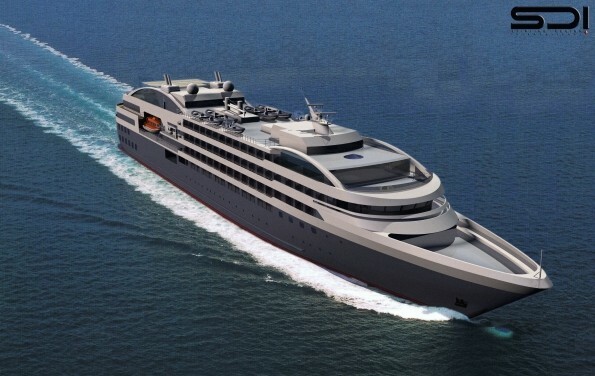
A computer rendering of Ponant's newbuild: Le Boreal.Today, a cruise ship’s wake must be environmentally clean and “green.”

“It is a very complex issue, but the environment is almost everything today,” explained Karl Morten Wiklund, director of passenger ships at Det Norske Veritas (DNV). The operating challenges require the best marine engineering practices and the latest innovative technologies to ensure that no untreated airborne or liquid emissions are left behind to compromise the marine environment.

IMO’s Mandated Air Emissions

A growing public awareness about the negative environmental impact of the maritime industry’s use of lowest cost – highest emissions fuel oil – is threatening severe local restrictions on world shipping’s discharge of sulfur exhaust emissions. As a result, in April 2008, the IMO’s Marine Environment Protection Committee (MEPC) recommended far-reaching changes to Annex VI’s air emission requirements and the vote for final approval will occur later in the year.

Those recommendations, if implemented, will require progressive vessel reductions of SOx emissions by initially reducing the fuel sulfur cap of 4.5 percent to 3.5 percent effective in 2012, with progressive reductions to 0.5 percent globally by 2020. Feasibility reviews to achieve the final 2020 goals would be completed by 2018. At the same time, fuel sulfur limitations in Sulfur Emission Control Areas (SECA) would be reduced from the present 1.5 percent to 1 percent by 2010 and to 0.1 percent by 2015.

“At DNV, we think it’s a wise decision by the IMO. To me it is very simple: Very poor quality fuel should not be burned onboard ships,” Wiklund said.

There are concerns among many shipowners questioning if the new proposed regulations are workable. Two related issues are whether sufficient supplies of low-sulfur fuels will be adequate where and when needed and at what cost. The MEPC recommendations have addressed the concerns offering shipowners alternative approaches when still using higher-sulfur fuels if the ships are equipped with appliances or use other compliance procedures that “are at least as effective in terms of reductions as that required by this Annex.”

For sulfur emissions, achieving  the mandatory emission reductions without using low-sulfur fuel, the alternative would be installing exhaust gas SOx scrubbers.

After reviewing the technical complexities of retrofitting SOx emission scrubbers to existing vessels and the operational issues for all vessels, Germanischer Lloyd (GL) believes “that it is better to use cleaner fuels than to clean the exhaust gases. One issue is that because of the reaction products of the scrubber process there will be a large amount of contaminated water for disposal,” said Wolfgang Wehlte, environmental passport team project engineer with GL.

Future Clear Power Technologies

Advancing diesel-engine technologies based on conventional fuels have steadily resulted in greener ship operations by reducing emissions of NOx, SOx and PM, plus improving fuel efficiency. However, significant emission reduction benefits using dual fuel diesel engines burning fuel oil and gaseous fuels have performed successfully as LNG tanker propulsion power and where LNG is available to power offshore vessels and an auto-passenger ferry since 2000.

One reality, Wiklund explained, is “because there already are gas installations on domestic ferries with several hundred passengers, we have trust in their safety record and should also recommend the fuel for other segments of shipping.

“DNV has proposed that LNG should be accepted by the IMO for all kinds of ships including cruise ships. DNV has made a very clear statement.”

Wehlte agreed that LNG power “is a practical approach,” but industry and regulatory acceptance “may be difficult,” and in the future distillate fuels with very low sulfur-content will likely remain the fuel of choice.

Still, Wiklund said the bottom line is the advantages of LNG fuel over conventional fuels: “It’s a far cleaner fuel. It produces less carbon. It’s more efficient.  And it is cheaper.”

Biofuels as an alternative to conventional petroleum-based fuels have been evaluated and tested by cruise lines. Concerns range from compatibility with existing diesel engines, the amount of energy required to produce bio-fuels and some shipowners’ experience that bio-fuels are less efficient than petroleum-based fuels, therefore requiring 10 to 15 percent more fuel to be burned.

In the future, fuel cells will have wider use as a power source aboard cruise ships. Wiklund said DNV “believes the technology will develop significantly in the years to come. The technology is in place; the challenge is to make this technology in Megawatt units big enough to serve the shipping community.”

On a smaller scale of the coming trend, the 150-passenger short range cruise vessel Elding I in Iceland has been converted to dual diesel-hydrogen fuel cell propulsion power. The ship’s quiet and non-polluting fuel cell system was certified by GL.

Excerpted from Cruise Industry News Quarterly Magazine: Summer 2008
 

Cruise Industry News Email Alerts


  • Cruise News
  • Magazine Subscription
  • Email Newsletter
  • Search
  • Cruise News
  • Magazine Subscription
  • Email Newsletter
  • Search
  1. Cruise Industry News
  2. Articles
  3. Summer 2008
  4. Focus Green: Leaving a Greener Wake
EMAIL NEWSLETTER

Get the latest breaking cruise news. Sign up.

CRUISE SHIP ORDERBOOK

84 Ships | 229,384 Berths | $89 Billion | View

Drydock Report
2026 Drydock Report

Highlights:

  • Full Overview
  • Record Refit Year
  • 26-27-28 Schedule
  • PDF Download
  • Order Today
2026 Executive Guide

Highlights:

  • All Brands
  • Decision Makers
  • Contact Info
  • Brand Background 
  • Instant Download
  • Order Today
Cruise Industry News
  • Advertising
  • About
  • Contact
Online News
  • Cruise News
  • Feature Magazine Articles
  • Orderbook
  • Events
Publications
  • Quarterly Magazine
  • Annual Report
  • Email Newsletter
  • Executive Guide
  • Digital Reports
Connect
  • Search
  • Facebook
  • Twitter
  • LinkedIn
© Cruise Industry News 1996-2026. All Rights Reserved.
We use cookies on our website to give you the most relevant experience by remembering your preferences and repeat visits. By clicking “Accept All”, you consent to the use of ALL the cookies. However, you may visit "Cookie Settings" to provide a controlled consent.
Cookie SettingsAccept All
Manage consent

Privacy Overview

This website uses cookies to improve your experience while you navigate through the website. Out of these, the cookies that are categorized as necessary are stored on your browser as they are essential for the working of basic functionalities of the website. We also use third-party cookies that help us analyze and understand how you use this website. These cookies will be stored in your browser only with your consent. You also have the option to opt-out of these cookies. But opting out of some of these cookies may affect your browsing experience.
Necessary
Always Enabled
Necessary cookies are absolutely essential for the website to function properly. These cookies ensure basic functionalities and security features of the website, anonymously.
CookieDurationDescription
cookielawinfo-checkbox-analytics11 monthsThis cookie is set by GDPR Cookie Consent plugin. The cookie is used to store the user consent for the cookies in the category "Analytics".
cookielawinfo-checkbox-functional11 monthsThe cookie is set by GDPR cookie consent to record the user consent for the cookies in the category "Functional".
cookielawinfo-checkbox-necessary11 monthsThis cookie is set by GDPR Cookie Consent plugin. The cookies is used to store the user consent for the cookies in the category "Necessary".
cookielawinfo-checkbox-others11 monthsThis cookie is set by GDPR Cookie Consent plugin. The cookie is used to store the user consent for the cookies in the category "Other.
cookielawinfo-checkbox-performance11 monthsThis cookie is set by GDPR Cookie Consent plugin. The cookie is used to store the user consent for the cookies in the category "Performance".
viewed_cookie_policy11 monthsThe cookie is set by the GDPR Cookie Consent plugin and is used to store whether or not user has consented to the use of cookies. It does not store any personal data.
Functional
Functional cookies help to perform certain functionalities like sharing the content of the website on social media platforms, collect feedbacks, and other third-party features.
Performance
Performance cookies are used to understand and analyze the key performance indexes of the website which helps in delivering a better user experience for the visitors.
Analytics
Analytical cookies are used to understand how visitors interact with the website. These cookies help provide information on metrics the number of visitors, bounce rate, traffic source, etc.
Advertisement
Advertisement cookies are used to provide visitors with relevant ads and marketing campaigns. These cookies track visitors across websites and collect information to provide customized ads.
Others
Other uncategorized cookies are those that are being analyzed and have not been classified into a category as yet.
SAVE & ACCEPT