Havila Voyages has announced that in March, it joined the European research project “LowNoiser,” which aims to develop practical, scalable and environmentally friendly technologies for the maritime industry.
The company said that, six months later, modifications are being carried out on the Havila Capella in collaboration with Kongsberg Maritime.
Havila stated in a press release that on October 30, the Havila Capella entered a 28-day docking period for her first five-year inspection at the Ulstein shipyard near Fosnavåg.
Both Azipull units will be fitted with new propeller blades, and a new, noise-reducing gearbox assembly will be installed as part of the LowNoiser project.
The new technology is expected to significantly reduce the ship’s underwater operating noise levels.
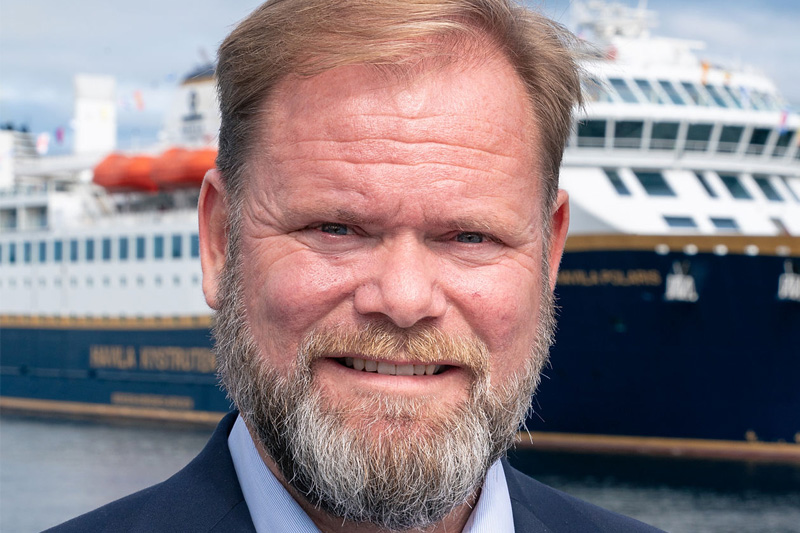
“All these adjustments and modifications may not seem particularly groundbreaking on their own but taken together they help us steadily advance towards our goal: that future generations – just like us – will be able to live off and along the Norwegian coast,” said Bent Martini, CEO of Havila Voyages.
In addition to the LowNoiser retrofits, the Havila Capella is also being fitted with a standardized IEC shore power connection, enabling charging at more ports.
Work is also underway on the LNG system to reduce its overall complexity. Finally, the vessel will be fitted with a new cargo door.
“The LowNoiser project impressively demonstrates how quickly a sustainable solution can emerge from practical research, the involvement of partners from the maritime industry and a shared vision. We are proud to be part of this project, as it underlines the expertise of the Norwegian maritime cluster as a whole,” added Martini.
Havila Voyages added that it aims to operate in a climate-neutral way on the Norwegian coastal route from 2028 and to be emission-free from 2030.
According to the press release, the LowNoiser team used hydrophone measurements, taken in the spring both on the vessel itself and in its operating area, as the basis for their data.
These measurements also serve as a reference for further measurements using the same set-up, scheduled for the first quarter of 2027.
This means that the technological improvements to the propulsion system now installed can be measured directly, and the expected reduction in noise emissions can be validated.
The release stated that in future, these results could benefit the rest of the fleet and the shipping industry through scalability.