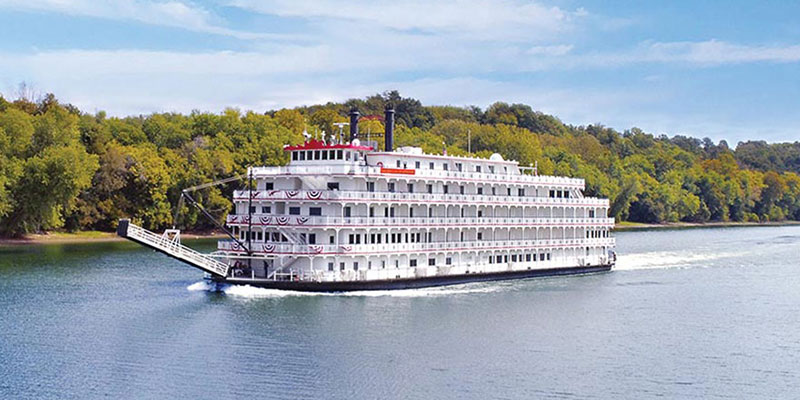
Passengers who were set to board the American Heritage this year will be transferred to the American Splendor, according to a statement issued by American Cruise Lines.
The American Heritage capsized and sank in the Mississippi River after being struck by a tanker while docked at the Port of New Orleans.
The company noted that the Splendor is also a paddlewheeler and will operate the Heritage’s sailings as scheduled.
Passengers are currently being contacted with updated itinerary information, including embarkation and disembarkation locations, ACL added.
The company also stated that it will contact guests booked on the American Heritage for cruises in 2027 and beyond with information about the status of their cruise and potential options.
ACL also noted it has resources available for impacted guests and crew members, adding that it has a crisis center set up on the ground in New Orleans.
The facility remains open to assist crew or guests remaining in the area, including travel assistance and support.
A dedicated hotline was established at 203-487-9252, which impacted passengers and crew can contact with any questions or ongoing needs.
As reported by Cruise Industry News, New Orleans authorities and ACL are currently planning an operation to salvage the American Heritage.
The Coast Guard is said to be working closely with ACL and partners to clear any remaining pollutants from the vessel before removing it.
“Our top priority during this process is the safety of the public, responders and the marine environment,” the U.S. Coast Guard Heartland said.
Part of ACL’s fleet of Mississippi paddlewheelers, the American Heritage was built at Chesapeake Shipbuilding in Maryland and entered service in 2015.
Having debuted as the Queen of the Mississippi, the 149-passenger vessel underwent a refurbishment before adopting its current name in 2021.
At the time, the company said that the refit aimed to bring it up to the “same sophisticated standard already exhibited on American’s newest modern riverboats, while retaining traditional elements true to steamboat history.”