TUI Cruises is stepping up efforts to reduce emissions across its fleet, combining alternative fuels with tighter energy-efficiency targets, artificial intelligence and waste-reduction initiatives.
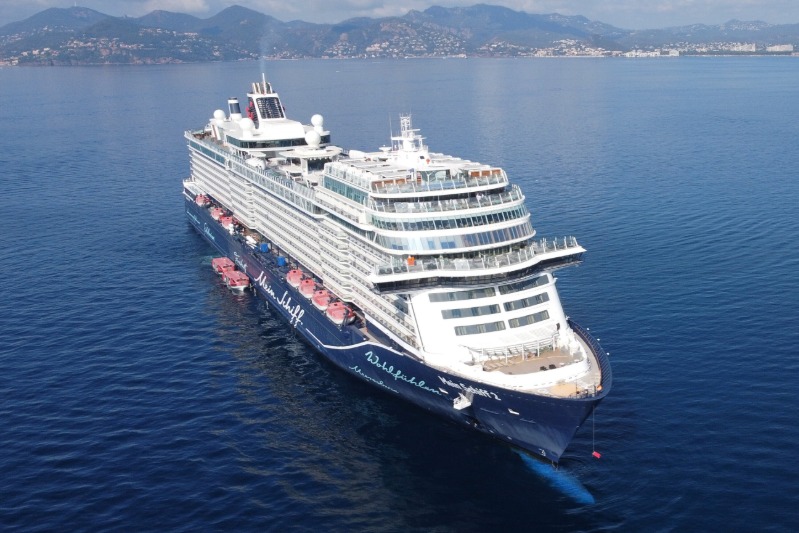
At the center of the strategy are the company’s newest Mein Schiff vessels, which were designed from the outset to use less energy. The Mein Schiff Relax and Mein Schiff Flow, the first of the new Intuition-class ships, are equipped with dual-fuel engines and are operating primarily on bio-LNG.
Lucienne Damm, head of sustainability at TUI Cruises, said the new ships consume less fuel per passenger day than the previous generation despite their larger size. The company has also worked with suppliers and ports to secure bio-LNG, after raising concerns over the environmental benefits of conventional LNG, which remains a fossil fuel.
Mein Schiff Relax began using bio-LNG in September last year, with the Port of Barcelona supporting the effort. Both Relax and Flow have since operated on bio-LNG throughout the summer season, although marine gas oil is still required in some circumstances. TUI Cruises expects continued bio-LNG use by Mein Schiff Flow in Northern Europe this winter to cut annual emissions by about 50,000 tons of CO2 equivalent.
The company is also looking beyond bio-LNG. TUI Cruises has begun testing green methanol aboard Mein Schiff 7, viewing the fuel as a potentially important long-term route to decarbonization. Damm said green methanol and e-LNG could ultimately play a major role in reaching zero-emission targets.
The immediate obstacle, however, is supply. Green methanol remains expensive and production capacity is limited. Damm argues that cruise companies cannot develop the necessary fuel infrastructure alone and says governments, fuel producers and other industry stakeholders will need to invest in expanding supply.
For the smaller Hapag-Lloyd Cruises fleet, TUI Cruises is taking a different approach. Because the ships operate around the world and have a smaller overall carbon footprint, the company is prioritizing energy efficiency rather than relying primarily on new fuels. Measures include second-generation biodiesel, route optimization, improved hull coatings and digital tools designed to reduce consumption.
Energy efficiency has also been built into TUI Cruises’ newbuild contracts. Each new ship is expected to be 5 percent to 10 percent more efficient than its predecessor, with shipyards required to demonstrate compliance during the first year of operation. The company says the latest Intuition-class vessels are being held to even higher standards.
Technology is becoming another key part of the strategy. TUI Cruises has established an internal fleet-performance department and is developing AI-driven systems to monitor fuel use, voyage planning and onboard operations. A pilot program also linked fuel-saving targets for captains and engineers to donations supporting marine-plastic cleanup in Greece.
With additional Intuition-class ships planned for 2031 and 2032, as well as efficiency upgrades scheduled during upcoming drydock periods, TUI Cruises is pursuing a broad decarbonization strategy. Yet the company acknowledges that its long-term progress will depend not only on ship technology, but also on whether the wider industry can develop affordable, scalable supplies of low-carbon fuels.
Excerpted from the Fall 2026 Cruise Industry News Quarterly Magazine.