Thurgau Travel is in the middle of the most ambitious fleet renewal in its history, with the five-star Thurgau Avanti due to sail in May 2027 and the newly announced Thurgau Arva set to follow in summer 2028.
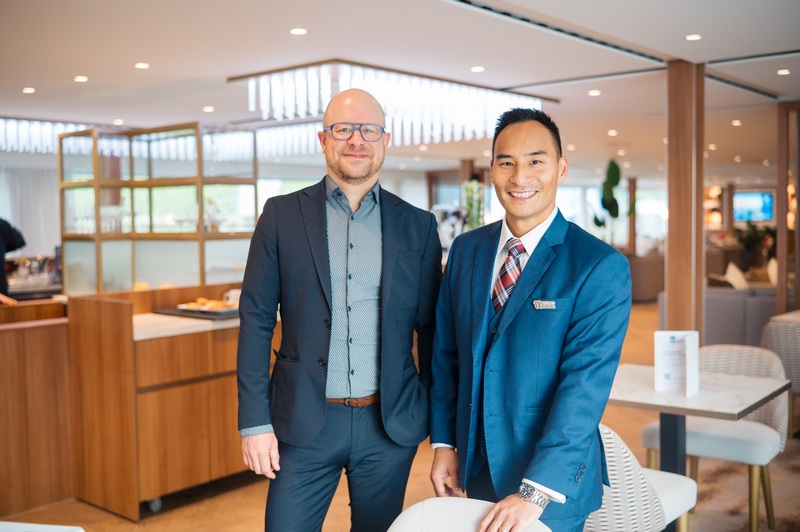
“With the Thurgau Avanti we are realizing a ship that combines the most comfort, style and technology at the highest level,” managing director Daniel Pauli-Kaufmann told Cruise Industry News in an interview for the 2027 European River Market Report.
Costing approximately 29 million Swiss francs, the 135-meter Avanti will feature 82 cabins, four junior suites, four suites, three restaurants and a private dining room. Her hull is being built in Romania before the ship is completed at TeamCo in Heusden, the Netherlands. The company is aiming for Green Award Gold status, already held by the Thurgau Gold, which entered service in 2023.
The Arva, carrying around 190 guests, takes its name from the arve, the Swiss stone pine. It will feature warm wood tones and natural materials rather than the high-gloss look of many new river ships, plus hybrid propulsion with battery storage for maneuvering.
The Avanti’s arrival will be accompanied by the retirement of the Antonio Bellucci, which sails her final season in spring 2027.
Thurgau Travel Germany managing director Tim Starke said the company chose not to introduce fuel surcharges for the German-speaking market when Middle East tensions pushed fuel prices sharply higher in 2026.
“Especially in a volatile market environment, we believe that reliability, transparency and planning security are of great importance to our guests and travel partners,” Starke said.
The company has also been extending its reach beyond the Rhine and the Danube, launching four new regional routes in Germany for 2026, including an 11-day crossing from Berlin to Saarbrücken aboard the Thurgau Saxonia.
“Guests are not only looking for your well-known highlights,” Starke said. “They are increasingly interested in the smaller towns, more distinctive landscapes, authentic regional stories and themed travel experiences.”
Pauli-Kaufmann said the move toward lesser-known waterways was a deliberate extension of the portfolio that let the company “reduce interchangeability and create river cruises with a stronger sense of place.”
On rising competition, both executives pointed to differentiation.
“The decisive question is not who offers the largest number of berths, but who offers a clear profile, reliable quality and travel experiences that are genuinely relevant to guests,” Starke said.
“Products that are too similar will come under more pressure,” Pauli-Kaufmann added.