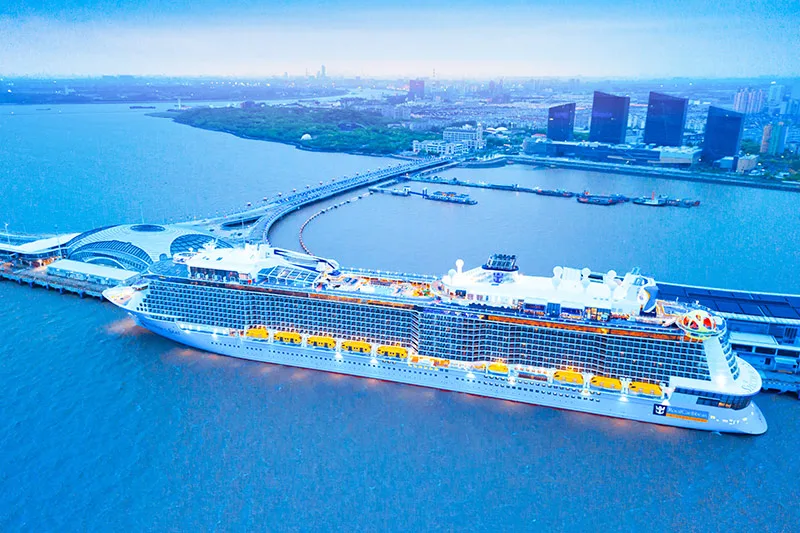
Royal Caribbean is deepening its commitment to China while broadening its strategy across Asia, as the cruise company seeks to capitalize on changing travel preferences and growing demand for experience-led vacations.
Benjamin Bouldin, president of Greater China and managing director of Asia at Royal Caribbean, said China remains a critical market for the company after 17 years of continuous investment. But the strategy is evolving beyond a China-focused approach toward a more integrated Asia platform connecting Greater China, Southeast Asia and other regional markets.
For the 2026-27 season, the Spectrum of the Seas will continue operating from Shanghai and Hong Kong, which Bouldin described as complementary homeports. Shanghai provides access to mainland Chinese travelers and the country’s expanding outbound market, while Hong Kong serves as an international gateway to Southeast Asia and longer-haul markets.
The Spectrum is scheduled to operate more than 70 cruises ranging from two to nine nights, visiting about 20 destinations in Japan, South Korea and Vietnam. Royal Caribbean expects the ships to attract not only Chinese travelers but also international guests, particularly on longer Hong Kong departures. The company is responding with multilingual services, varied dining options, entertainment and guest communications aimed at an increasingly diverse customer base.
Royal Caribbean plans to expand the range and flexibility of its Asian offerings for 2027-28. That season will feature 56 sailings of three to 11 nights covering 22 Asian destinations. Among the new initiatives will be open-jaw cruises, including itineraries using Yokohama as both an arrival and departure point.
Bouldin said Chinese travelers are increasingly seeking novelty, deeper destination experiences and flexibility rather than conventional shopping-focused trips. That shift is influencing Royal Caribbean’s product development as the company attempts to position cruising as a broader vacation experience centered on discovery, entertainment and time with family and friends.
The broader fleet deployment reflects the regional strategy. The Navigator of the Seas will operate year-round from Singapore beginning in October 2026, while the Quantum of the Seas is scheduled to sail from Singapore from October 2027 through March 2028. The Voyager of the Seas will operate from Singapore and Hong Kong from January through April 2028, including new Hong Kong round trips and a Singapore-to-Hong Kong itinerary.
Royal Caribbean is also adapting to changes in China’s travel distribution system, which Bouldin said is becoming increasingly focused on independent travelers and digital sales. The company’s Royal Partner+ platform provides travel agents with live inventory, booking confirmations, sales tools, training and event support. By the end of the second quarter, more than 200 travel partners had joined the platform, with nearly 6,000 registered users across more than 40 Chinese cities.
Bouldin characterized China’s cruise industry as entering a “second golden decade,” with greater brand diversity and product variety helping expand the overall market. Royal Caribbean’s strategy, he said, is less about competing directly with individual brands and more about developing modern cruise products and strengthening connections among Asian markets.
The company sees China and the wider Asia-Pacific region as long-term growth opportunities, with its strategy focused on increasing cruise adoption through differentiated products, immersive itineraries, international sourcing and stronger regional connectivity.
Excerpted from the Fall 2026 Cruise Industry News Quarterly Magazine.