The Massachusetts Port Authority (Massport) has appointed Charlie Cunnion as its port director.
Cunnion brings more than 25 years of leadership experience in global transportation, supply chain management, operations, organizational transformation and strategic planning.
“Cunnion is an expert in supply chain management, with decades of experience across all modes of cargo transportation,” said Massport CEO Rich Davey.
“His leadership, experience and strategic perspective will be invaluable to the Port of Boston as we work to strengthen operations and continue a tradition of innovation and growth,” added Davey.
“I am thrilled to have him on my leadership team and look forward to seeing him build on the success of Conley Terminal and Flynn Cruiseport in his new role.”
The authority said in a press release that as Port Director, Cunnion will lead Massport’s Maritime Division and help advance its commitment to operational excellence, safety, customer service, workforce development and sustainable growth across its maritime facilities.
Cunnion began his career at International Forest Products (IFP), where he rose to vice president of global transportation.
In 2024, he joined the IFP-CMPC joint venture, which became CMPC Forest Products North America, as vice president of supply chain management and customer service.
Most recently, he served as vice president of supply chain and customer service for CMPC Forest Products North America.
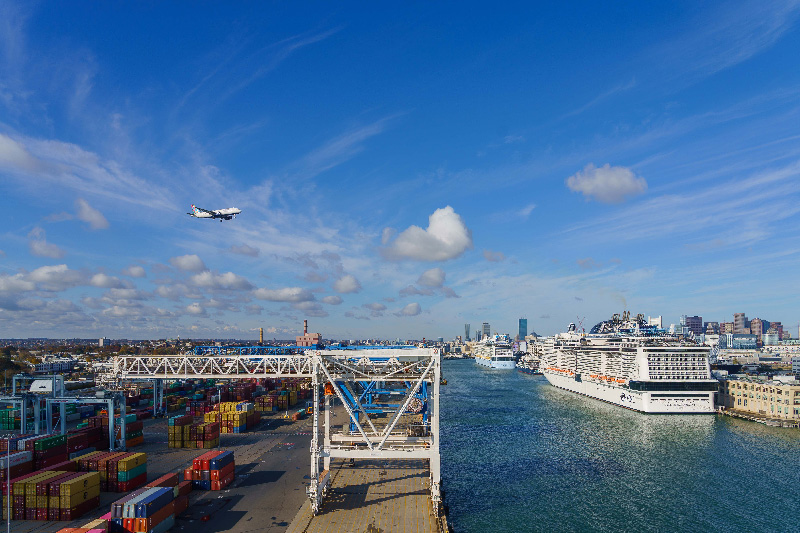
In the press release, the port authority added that the Flynn Cruiseport Boston continues to serve more passengers and cruise ships each year. It served over 454,000 passengers and 149 ship calls in 2025.
It also said Massport has committed over $100 million to upgrades at Flynn Cruiseport, including expanding the waiting area with more seating and restrooms, streamlining security check-in, and installing a new escalator to improve passenger flow.
Massport has announced a plan to bring ship-to-shore power to the Cruiseport by 2030.
Nearly 80 percent of the ships that currently serve Boston can plug into shore power or use alternative low-carbon technology.