Fincantieri is expanding its use of artificial intelligence, integrated data and connected ship technology as it prepares to deliver a record cruise orderbook extending through 2039. Alongside investments in its shipyards, the Italian shipbuilder is working to strengthen supplier coordination, increase production capacity and maintain control over increasingly complex construction projects.
Luigi Matarazzo, general manager of Fincantieri’s merchant ships division, told Cruise Industry News that digitalization is helping the company coordinate activities across its organization and supply chain. Engineering teams, suppliers and subcontractors frequently work simultaneously on the same ship from different locations, making accurate and continuously updated information essential.
Fincantieri is currently applying artificial intelligence in three engineering areas: project configuration management, systems design support and AI-based tools for engineers. Matarazzo identified configuration management as particularly critical because ship designs evolve continuously. Changes to one system or discipline can affect numerous other areas, requiring documents, interfaces and engineering decisions to remain synchronized.
AI can help identify changes, inconsistencies and potential impacts earlier, allowing engineers to maintain greater control over increasingly complicated projects. In systems design, AI tools can analyze project information, identify constraints and interfaces, and draw on data from previous projects to support engineering decisions.
Underlying these initiatives is Fincantieri’s data lake, which consolidates information generated during engineering, production and increasingly the operational life of ships. The data lake supports analytics and key performance indicators across the organization and provides the foundation for developing and validating AI applications.
The accumulated data is also supporting Fincantieri’s digital-twin technology which connects information generated during design and construction with data from the vessel’s actual operation. Digital models can be used before construction to simulate the behavior of ships and their systems, while operational data after delivery can help monitor performance and support energy-efficiency, maintenance and reliability initiatives, according to Matarazzo.
Fincantieri has extended this approach through Navis Sapiens, an open digital platform designed to create a common environment for applications using information generated onboard. The platform connects ships with shore-based systems and is being developed for applications involving energy efficiency, predictive maintenance, vessel performance, safety and cybersecurity.
Digitalization is also being applied to Fincantieri’s supply chain. Its “Supplier Network Evolution” initiative focuses on improving business processes among partner companies, attracting and retaining skilled workers and providing suppliers with tools and support to improve competitiveness.
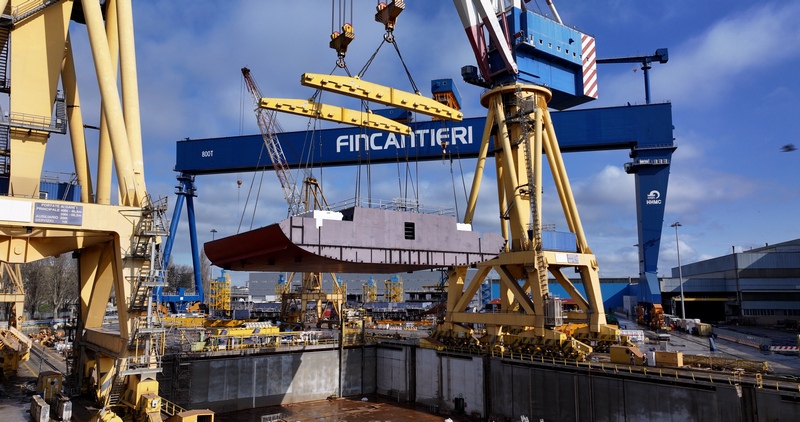
The company is simultaneously investing in physical production capacity. New 800-ton cranes at Monfalcone are expected to allow the yard to handle larger blocks and build vessels up to 230,000 tons. Additional investments are planned at Ancona, while Palermo is scheduled for a major transformation by 2028 to support newbuild construction.
Excerpted from the Fall 2026 Cruise Industry News Quarterly Magazine.