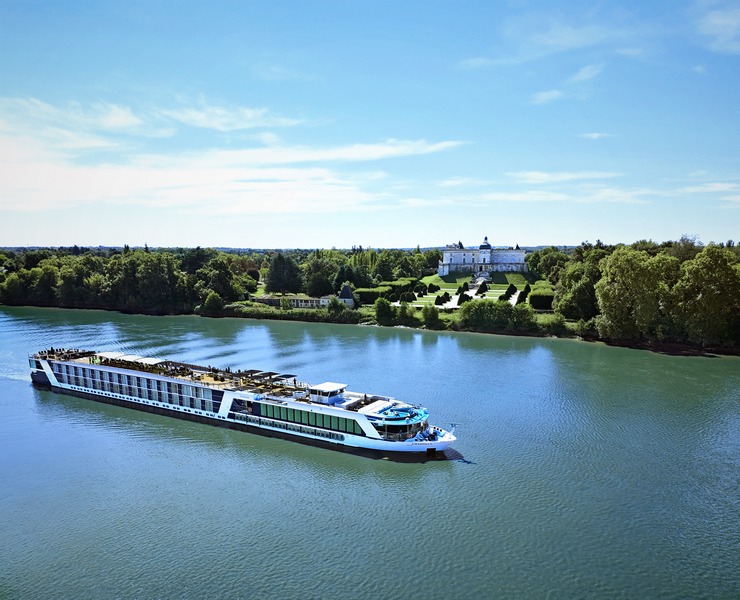
AmaWaterways is building toward a fleet of more than 50 ships by 2032, with newbuilds lined up for the Nile, the Mekong, the Danube, the Rhine and the Douro, plus a double-width vessel set to be the largest river cruise ship in Europe.
“We have plans to expand thoughtfully into new markets outside of Europe, and earlier this year we announced our plans to operate more than 50 ships by 2032,” CEO Catherine Powell told Cruise Industry News in an interview for the 2027 European River Market Report.
The centerpiece of the 2027 program is the AmaRudi, the line’s second double-width ship after the AmaMagna. Carrying 196 guests in 98 staterooms, she will be the first ship in the fleet named after a man, honoring co-founder and chairman Rudi Schreiner.
Powell said the extra beam would go to public spaces rather than more staterooms.
“There will be more room to relax, more dining options, expanded wellness facilities and inviting public spaces designed for both quiet moments and social gatherings,” she explained, adding that the ship would feature a dedicated entertainment venue and a full-sized pickleball court on the Sun Deck.
Her size means the AmaRudi will be dedicated to the Danube, which Powell said was not a limitation. “The Danube is one of Europe’s most iconic rivers … and it’s the perfect setting for a ship like the AmaRudi.”
The company’s public orderbook runs through 2028. The AmaNubia debuts on the Nile with 38 staterooms, while the AmaCleo adds further capacity in Egypt. In 2027, the AmaMaya enters service on the Mekong with 60 staterooms and the AmaFiora joins the Rhine with 76 staterooms. The AmaMaria follows on the Danube and the AmaGaia on the Douro in 2028.
Powell said exotic destinations such as the Nile, the Mekong, the Chobe and the Magdalena were performing especially well, though Europe remained the heart of the business.
The line has also stretched its season, adding February departures on some Rhine and Danube itineraries and extending sailings in Portugal into December, including holiday and New Year’s departures.
While North America remains its largest market, Powell said the company was seeing growth from the U.K. and Australia, and more first-time, younger, multigenerational and solo travelers.
On rising competition and port congestion, she pointed to choices such as docking in Zaandam instead of central Amsterdam.
“It’s a short transfer for our guests, but it helps reduce congestion while introducing them to a destination they might not have experienced otherwise,” Powell said.
Growth, she added, came second to culture. “Ships don’t create unforgettable journeys. People do.”