For most of shipbuilding history, a window on a vessel just meant a small porthole. These were originally cut into hulls to hold cannons, then were sealed over and repurposed once the naval guns gave way to passenger travel.
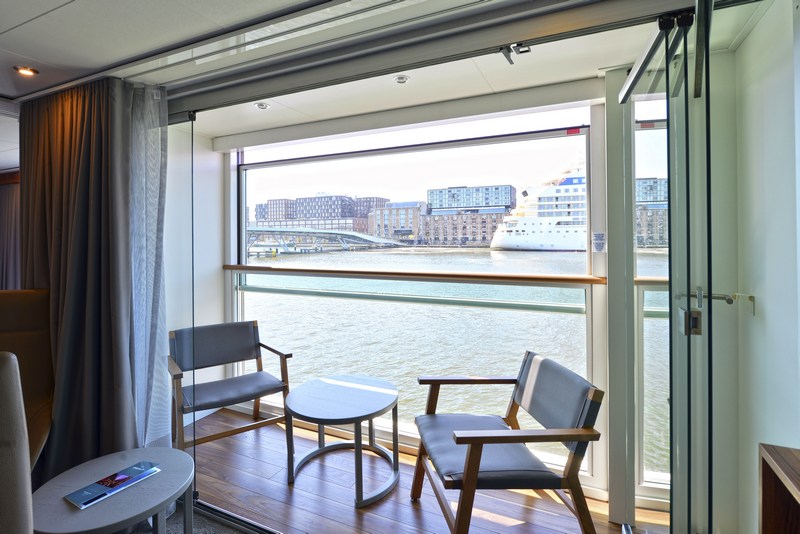
However on today’s river cruise ships, those little portholes have largely disappeared, replaced by massive floor-to-ceiling glass designed so that one can sit and disappear into the view rather than just been there to frame it, or to shoot your enemies from…
Metaglas, is a family-run Dutch company based in Tiel and has spent 15 years helping make that type of vision shift happen.
Metaglas was founded 50 years ago as a maker of slim aluminum window and facade systems for both homes and commercial buildings with the company entering the maritime market back in 2010 through doing refurbishment work on existing river cruise vessels.
Its glazing systems are now installed on more than 100 ships, with the current focus shifted mainly to newbuild projects.
“Of course, the passenger experience is playing a super important role in the design of modern river cruise ships,” said Erik Rekveld, technical commercial advisor at Metaglas.
“Cruise operators obviously want their cabins, restaurants and their public spaces to feel much more open and more closely connected to the landscape that the vessel is sailing through, it’s a superior experience.”
A big demand for this shows up in the vertical sliding window system that Metaglas has built specifically for passenger cabins, using two glass panels.
The upper panel can slide down for ventilation while the lower panel will stay in place as a transparent balustrade, basically opening up a large section of the facade without all the weight or space demands of the more traditional balcony.
Refurbishment work, the very market that first brought Metaglas into shipbuilding, still remains part of the business too, Rekveld said. Updating an older vessel’s glazing can meaningfully improve its comfort and appearance without having to do a total rebuild.
Rekveld said the biggest engineering challenge now is balancing maximum transparency against the weight and structural performance, all while accounting for the movement and forces a ship experiences that a static structure just does not have to deal with.
“It would often be so much more easier to use larger profiles or simply just add more material,” Rekveld explains. “But on a river cruise vessel, however, that works against two of your main objectives, that being maintaining an unobstructed view, and still keeping the weight as low as possible.”
Metaglas has been working to develop much thinner glass compositions and slimmer aluminum profiles that can cut the weight without compromising any insulation or safety standards.
Aluminum can be recycled repeatedly and so every kilogram removed from the superstructure will translate into a lower fuel consumption for the specific vessel.
“Absolutely every kilogram counts on board a vessel,” Rekveld said. “If you have a lower weight that means there is much less mass to move and can therefore contribute to more much more efficient energy and fuel consumption.”
The company’s product line is now extending well beyond cabin windows to include horizontal sliding windows, glass balconies, walkable rooflights, electrically operated entrance doors, folding walls and bonded glazing for onboard restaurants, which are all engineered in-house alongside the shipyards and other technical partners they are associated with.
From those riveted, old cannon-sized portholes that once defined a ship’s exterior, windows are now an eye into the world instead of an eye into the enemy.
Where those openings were essentially built to keep the potentially scary outside world out, the windows system in the modern age, sailing on Europe’s rivers, are being built to bring the whole experience of the beautiful outside in.