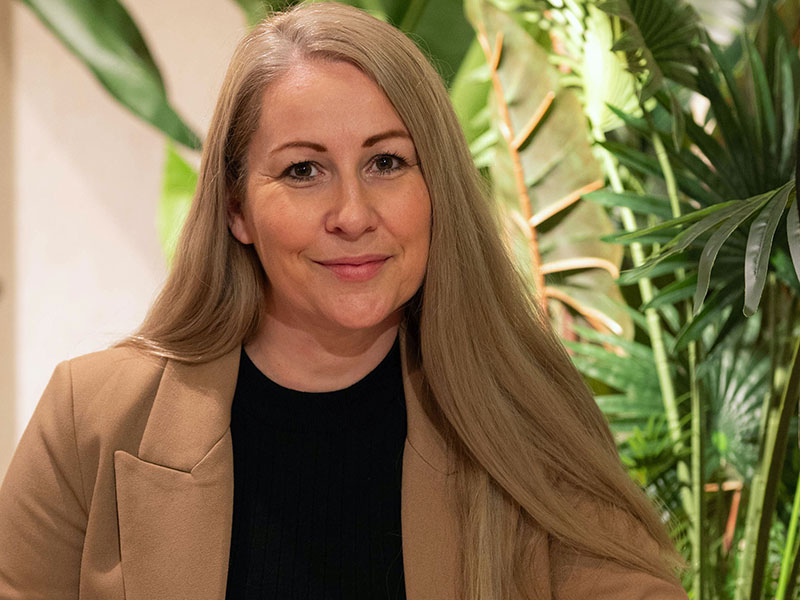
Marloes Boele started working in interior design at the age of 16 as a side job while she was still a student, then moved into the profession full time a few years later.
She launched MDESIGNS in 2007. And somewhere between those two facts lies a philosophy that has quietly shaped the interiors of some of the most interesting river cruise ships currently entering the European waterways.
“Every project at MDESIGNS starts with us doing trend forecasting,” said founder and owner, Boele.
“We read all those subtle shifts in society to really understand what people will need and expect, not just for today but for years from now.”
That forward-looking approach sets MDESIGNS apart from most interior design firms working in the river cruise sector.
Where many studios respond to a brief, Boele begins by starting upstream.
They ask what social and cultural forces will shape the guest of the future before a single material is chosen or even a floor plan is drawn up.
The result is interiors that feel considered personally rather than simply being professionally “decorated.”
The most recent and perhaps one of their most ambitious examples is the Century Star, delivered in June 2026 for Century Cruises.
Century Cruises is a Chinese operator making its entry with a newbuild into the European river cruise market.
The brief was both commercially and culturally complex. How do you design a ship that speaks authentically to Chinese heritage while also honoring the ten nations the vessel sails through on the Danube?
MDESIGNS’ answer was a concept called Rivers Entwined where each venue aboard the Century Star is anchored in a specific Danube country and layered on top with Chinese heritage.
Germany, Austria, Slovakia, Hungary, Croatia, Serbia, Romania, Bulgaria, Moldova and Ukraine also each find an expression somewhere onboard.
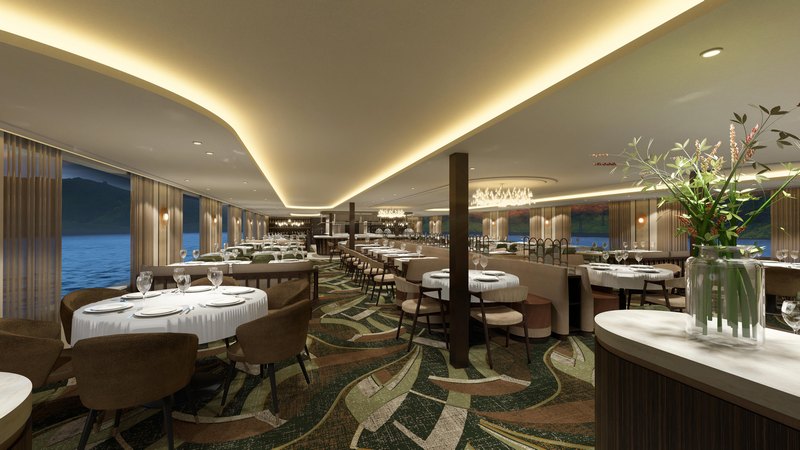
The restaurant was where the concept found its most vibrant expression.
And it was here that MDESIGNS deployed something truly new in river cruise interior design. Artificial intelligence (AI).
“We used artificial intelligence to create original artworks that bring European and Chinese symbolism together in one image,” Boele said.
“For example, In the restaurant, we depicted deer, snakes and birds. These are all animals found in the forests of both Germany and China, and we interpreted it in a style that is reminiscent of traditional Chinese silk painting.
“AI helped us work with a design tool rather than just as a shortcut. It let us merge two visual languages with a level of nuance and speed that would have been very hard to reach by hand.”
Boele describes the result as both timeless and new. It’s imagery that neither culture would claim entirely as its own, but that both would recognize.
Working within the spatial constraints of a river cruise ship is where Boele’s technical background becomes as important as her creative instincts.
River ships are where, as she puts it, no inch is left unused and every decision has to work effortlessly alongside construction managers, figuring out how to hide wiring, air ducts and climate systems out of sight from guests.
On the nickoSPIRIT newbuild in 2020, MDESIGNS joined early enough to help shape the general arrangement itself including the floor plan.
“In the cabins, we reshaped the bathrooms for a greater sense of openness and turned window seats into small lounge areas instead of leaving them as leftover space,” Boele said.
“In the lobby, we pushed for much more natural daylight to reach right from the top deck right down to the lowest one, which just makes that deck feel so inviting rather than just a space guests maybe avoided.
“I think what actually started initially as a constraint, like the limited footprint and hidden infrastructure, well that actually became the reason that those spaces now feel deliberate and beautiful instead of just cramped.”
The distinction matters both commercially and aesthetically for the ships and their guests.
As Boele explained: ”The main difference from a land-based hotel is that guests wake up somewhere new almost every day, a different city or a stretch of nature along the Danube, yet return to the same interior each evening.”
If one would have to compare it with an ocean ship, these spaces need to be much more multifunctional simply because there is limited space onboard to create different rooms.
That means the interior has to work as what Boele calls a “constant,” somewhere that is familiar, and a comforting through-line while everything outside the windows keeps changing.
That philosophy has been carefully expressed in the six Nicko Cruises sister ships MDESIGNS has designed for the Danube.
Each ship’s interior concept has been influenced from a woman. That includes Marie Antoinette’s Versailles for the Belvedere, Queen Victoria’s elegance for the Viktoria, the drama of Spanish dance for the Bolero or Queen Máxima’s warmth for the Maxima.
The fifth sister, the Celina, also joined the fleet with an interior inspired by the goddess of the moon where one can see orbits, starry skies and tidal rhythms running through all the lounge, restaurant and cabins.
This year the sixth, the renovated Bellejour, followed, drawing on Empress Joséphine de Beauharnais and her legendary rose gardens at Malmaison, where butterflies, flowers, leaves and the soft light of dew-covered gardens now carry that concept from cabin to corridor to restaurant.
“The transitions between onboard spaces have to work so much harder on a river ship,” Boele added. “And then also, every single space has to really earn its footprint on there, because together they are what ties the whole journey into one enchanted experience.”
And when it comes to the technical puzzles that river cruise design inevitably presents, Boele has a simple philosophy: “Can’t is not in our dictionary.”