Aurora Expeditions has announced that it is preparing to launch its 2026-27 Antarctic season, with 27 voyages across three ships exploring the Southern Ocean.
Sailing aboard the Greg Mortimer, Sylvia Earle and Douglas Mawson, the season features voyages ranging from nine to 34 days, with itineraries reaching the Antarctic Peninsula, Antarctic Circle, Weddell Sea, South Georgia, Falkland Islands, Ross Sea and East Antarctica.
This season, some of the most fascinating discoveries may be happening alongside expeditioners, the company said in a press release.
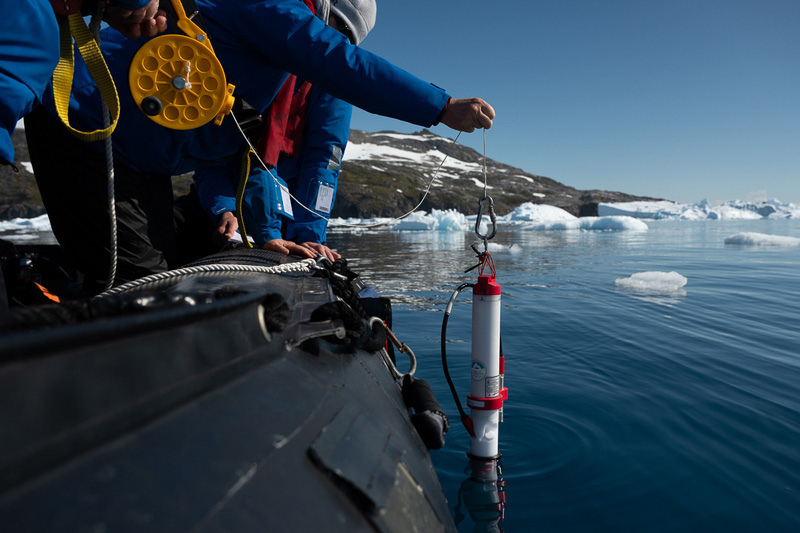
Across 11 voyages, Aurora will provide a platform for active Antarctic research, with 18 scientists participating across five scientific projects.
Research will span whale ecology and health, penguin population monitoring, wildlife disease, marine biodiversity and deep-sea exploration.
According to the press release, science is a major focus of the 2026-27 season.
The ships will serve as fieldwork platforms, giving expeditioners direct access to current Antarctic research and the people conducting it:
Whales: The Friedlaender Lab at the University of California, Santa Cruz will study Antarctic whale ecology, behavior and health using observations, calibrated drone imagery and minimally invasive sampling.
Penguins: Six Oceanites scientists will contribute to the long-running Antarctic Site Inventory, using ground and drone surveys to monitor penguin abundance, breeding activity and population change across selected sites on the Antarctic Peninsula.
Wildlife health: Researchers from the Institute for Marine and Antarctic Studies (IMAS), University of Tasmania, will investigate whales, seals and seabirds, including pathogen surveillance and how environmental variability and climate change affect Antarctic predators and ecosystems.
Marine biodiversity: Reef Life Survey: University of Tasmania researchers will conduct standardized underwater biodiversity surveys.
Colossal squid: On Epic Antarctica: Crossing the 7th Continent, scientists from the Museum of New Zealand Te Papa Tongarewa and Auckland University of Technology will undertake Project ESCA.
The scientific teams include marine ecologists, wildlife biologists, drone pilots, deep-sea technologists and conservation specialists.