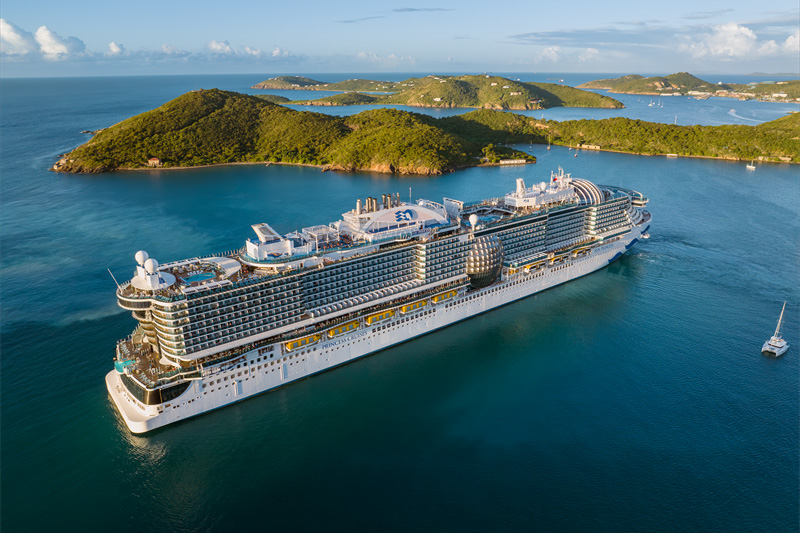
Wartsila and Carnival Corporation have entered into an eight-year Lifecycle Agreement covering four cruise ships in the Princess Cruises and Carnival Cruise Line fleets, including two newbuild vessels currently under construction.
The agreement marks the first service contract between the companies covering Carnival LNG-fueled cruise ships.
“The agreement reinforces Carnival Corporation’s ongoing commitment to operational excellence, sustainability and delivering a world-class guest experience,” said Vera Lannek, VP of strategic sourcing and asset management at Carnival.
“By working with Wartsila through a long-term lifecycle agreement, we can further strengthen the performance of the covered vessels while supporting the high standards our guests and operations depend on,” added Lannek.
“This agreement is the latest milestone in the long-standing relationship between Carnival Corporation and Wartsila,” said Andrea Morgante, VP of performance services at Wartsila Marine.
“It reflects our shared focus on ensuring high-performing cruise operations through proactive lifecycle support, data-driven insight and close technical collaboration throughout the vessel lifecycle.”
Wartsila said in a press release that under the agreement, it will provide a lifecycle maintenance solution for the vessels’ Wartsila dual-fuel engines and related equipment.
Wartsila booked the order in Q2 2026, and the Lifecycle Agreement provides long-term lifecycle support focused on optimizing asset performance throughout the vessel lifecycle.
The scope of the agreement includes:
- Planned and unplanned maintenance support
- Spare parts supply and logistics
- Major engine overhauls
- Remote monitoring and condition-based maintenance
- Technical audits and performance reviews
- Advisory services
- Crew training, and
- Performance management through agreed KPIs and a performance-based framework.
According to the press release, the agreement also provides Carnival with a lifecycle partnership focused on maintaining fleet reliability, increasing asset availability and optimizing total cost of ownership across the covered vessels.
Its performance-based structure also aligns the companies around measurable operational outcomes, including lower unscheduled maintenance costs and fewer unplanned stops.