Marella Cruises is celebrating its 30th anniversary this year, carrying record-high forward bookings and pressing ahead on new homeports and an expanded entertainment and dining program.
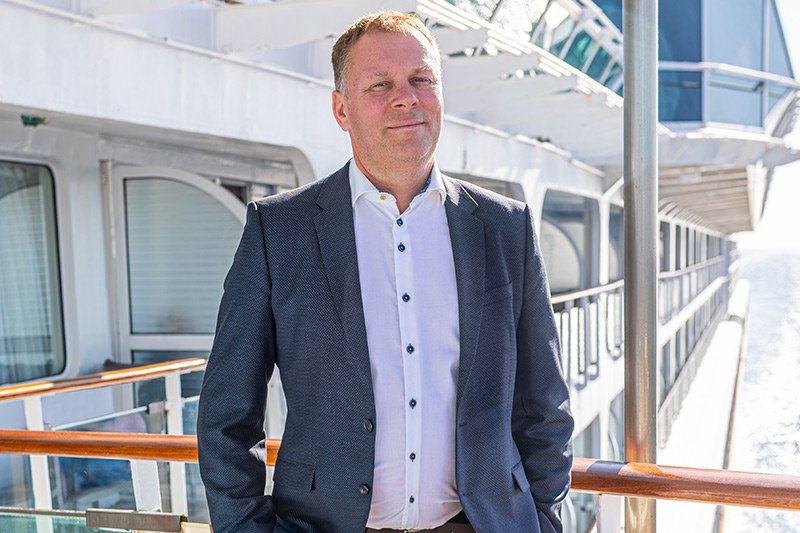
“Coming back on the back of 2025, which was our most successful year for Marella Cruises, we’ve come into 2026 with record bookings,” said Chris Hackney, CEO. “It’s our 30th year anniversary, so we’ve come from a really good place, from a customer perspective, an operational perspective and a commercial perspective.”
Three Decades
Marella Cruises traces its roots to Thompson Cruises, which launched in 1996.
Over three decades, the brand has undergone significant transformation in its fleet and product positioning.
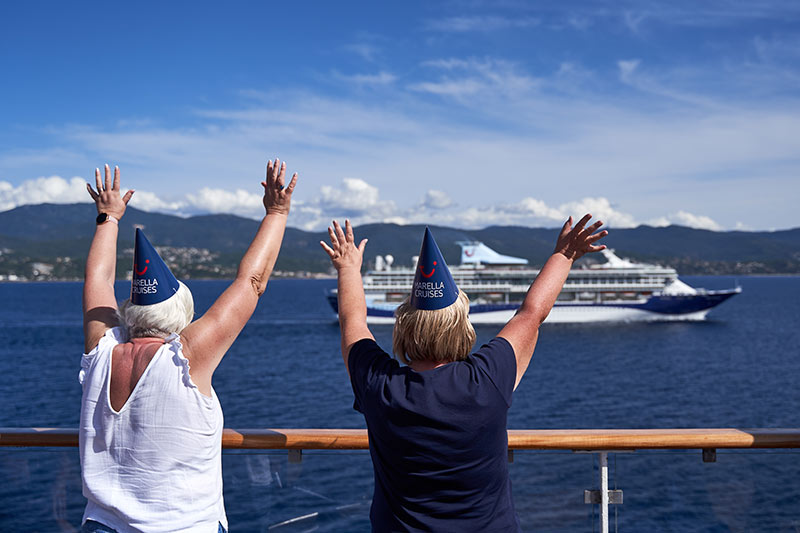
The 30th anniversary was marked with a fleet celebration in May, with two ships gathered in Corsica and Dubrovnik simultaneously.
“It was a real celebration in terms of who we are today, but also recognizing where we’ve come from. The ‘party like it was 1996’ theme was a true reflection of that look back to yesteryear when we first started out,” said Hackney.
Just a decade ago, Marella operated a mixed model, a combination of owned vessels and chartered ships from third parties such as Celestyal, resulting in varying ship sizes and onboard offerings.
Today, the line operates five ships of similar scale and layout, which Hackney credits with enabling a far more consistent and marketable product and giving customers clarity in terms of what they’re getting.
All Inclusive
That clarity extends to Marella’s all-inclusive model, which Hackney views as an advantage in the current travel market.
“We were one of the first cruise lines to become all-inclusive across our fleet, and that leans into a time where people want that certainty around budgets,” he said.
Service scores across the fleet, he added, are running at 9.7 to 9.8 out of 10.
Where Marella is most clearly differentiated from its British market peers is in its relationship with the TUI Group, with access to TUI’s aviation fleet, hotel portfolio and destination infrastructure.
For a UK-focused cruise brand, those assets translate into deployment flexibility.
Hackney said TUI’s in-house airline gives the company a competitive advantage in ship deployment flexibility, with flights available from more than 20 UK and Ireland airports, putting most customers within 90 minutes of a departure point.
For the coming winter season, Marella will operate two ships in the Canary Islands and three in the Caribbean.
A new Malaga homeport operation is planned for 2027, which is a deployment that fits into the company’s tendency of introducing fresh embarkation points, including La Romana and Limassol.
Hackney said that the TUI hotel portfolio is also part of the homeport decision-making, with roughly 20 percent of guests now combining a cruise with a post-holiday hotel stay.
“We’ve seen quite significant growth in the last 12 to 18 months of customers doing a week’s cruise and then staying for three or four nights,” he said. “Having the hotel product means we’re flying to destinations where we have a huge range of properties.”
Onboard Product Development
On the onboard product side, food and beverage enhancements have been driven by customer feedback gathered through both post-cruise surveys and a real-time in-app rating system deployed across the fleet.
Each ship now features over 10 restaurants, and new concepts are added through a customer feedback process.
Marella launched Umi Sushi on the Marella Voyager in late 2025 after nine months of development.
When the Voyager entered service in 2023, a Mexican restaurant was also introduced based on demand data.
New venue concepts are also in development for the Marella Discovery 2, with plans to launch later in 2026.
Customer Retention
Marella’s in-app rating system provides real-time granular data. Guests can rate individual restaurants, the spa, and other venues during the sailing, and that is supplemented by post-cruise questionnaires.
Hackney said the line is applying artificial intelligence tools to surface themes from that data more quickly.
This allows them to identify areas for improvement, but also see what’s working well.
“Our customer satisfaction scores have never been higher than they are today,” he said. “And our retention levels are at record highs, customers are coming back to us time and time again.”
Hackney attributed this in part to the quality of shipboard staff, who undergo training programs, but are encouraged to show their individual personalities rather than follow a script. The Apollo Group oversees the company’s hotel product.
“We not only have a great training program for our teams onboard, but we allow them to show their personality. That really resonates with our customers.”
Hackney said the line’s strength was the sum of its parts: the all-inclusive model, the TUI infrastructure, the consistency of the fleet, and delivering what the guests actually want based on feedback.
“The key is really listening to what your customers are telling you,” he said. “We’ve got much more in-depth insight now. That’s the foundation of what we should be basing our decisions around.”
Excerpted from the Summer 2026 Cruise Industry News Quarterly Magazine.