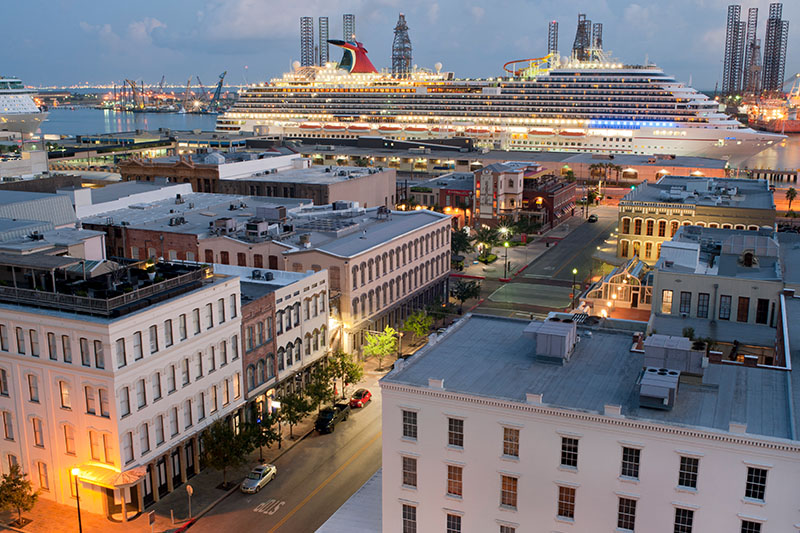
The Port of Galveston has launched its first comprehensive mobility study to ensure that people and goods continue to move safely and efficiently throughout the port and surrounding community as the port grows.
Rodger Rees, Galveston Wharves port director and CEO, said: “The mobility study is much more than a traffic study.”
“It identifies ways to improve safety, reduce conflicts between vehicles and pedestrians, and create better connections between destinations,” he added.
According to Rees, this is especially important as the port and the city continue to grow as a cruise and tourism destination.
“A key goal is creating safer, more convenient connections between the port’s cruise terminals, commercial waterfront and Historic Downtown Galveston so that visitors can enjoy all that the waterfront and downtown businesses have to offer,” Rees stated.
The port said in a press release that it contracted with Bermello Ajamil & Partners, the firm that did the port’s long-range master plans, to do the first phase of the study.
The recently updated master plan envisions a fifth cruise terminal and a commercial area with a hotel, retail, multi-family housing and greenspace located adjacent to downtown Galveston and neighborhoods.
The first phase of the port-funded mobility study will focus on the area bounded by Galveston Harbor, 14th Street, 33rd Street and Church Street, encompassing port property, downtown and nearby neighborhoods.
Researchers will evaluate existing transportation conditions, anticipate future demand and recommend practical improvements that support both economic growth and public safety.
The study will evaluate ways to integrate better transportation options, including Island Transit, the city’s trolley system and the port’s elevated pedestrian walkover at 25th Street.
It also will examine opportunities to improve sidewalks, pedestrian crossings, bicycle access, signage and wayfinding to help residents and visitors safely navigate the waterfront.
The port has already been awarded almost $5 million in grant funds to implement road, sidewalk and wayfinding improvements.
Another important objective is identifying and mitigating future traffic challenges before they become larger problems.
The study will also incorporate recommendations from both the Port of Galveston and the City of Galveston Safe Streets and Roads for All action plans, for a coordinated approach.
The port said that this effort builds on work that has been already completed at the port, including a two-mile internal roadway system.