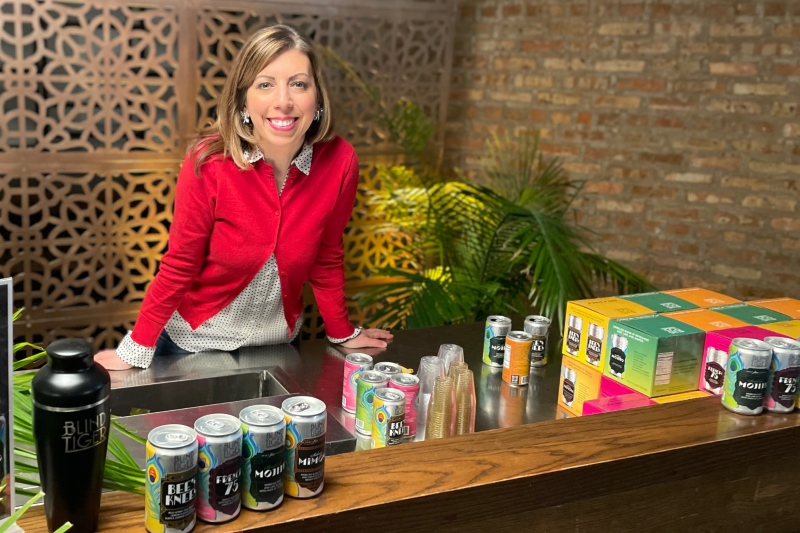
As cruise lines look build up alcohol-free options, Blind Tiger Spirit-Free Cocktails mixes modeled on Prohibition-era recipes have made their way to the entire Royal Caribbean International fleet, as well as the Disney Adventure and Virgin Voyages’ Bimini Beach Club.
“We as a society didn’t really offer many creative alternatives to alcohol before. I think that because of the influx of younger generations drinking less and the opportunity to bring products into market, older individuals now are looking for those options, when they would historically go to a coffee or water. The awareness is building on it,” CEO Rebecca Styn told Cruise Industry News.
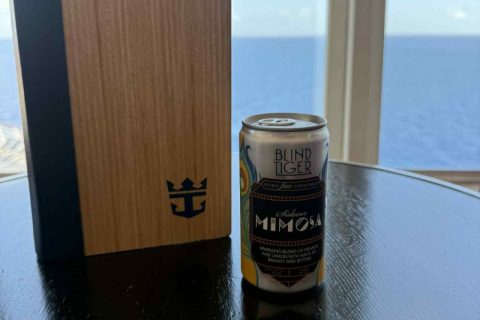
With Royal Caribbean, the brand offers the Lavender French 75, Southside Mojito and Sidecar Mimosa; with Virgin just the Mojito and with Disney the Mojito and the Lavender.
“Our Lavender French 75 is our most popular varietal across the board, it sells 3:1 to our other varietals,” explained Styn.
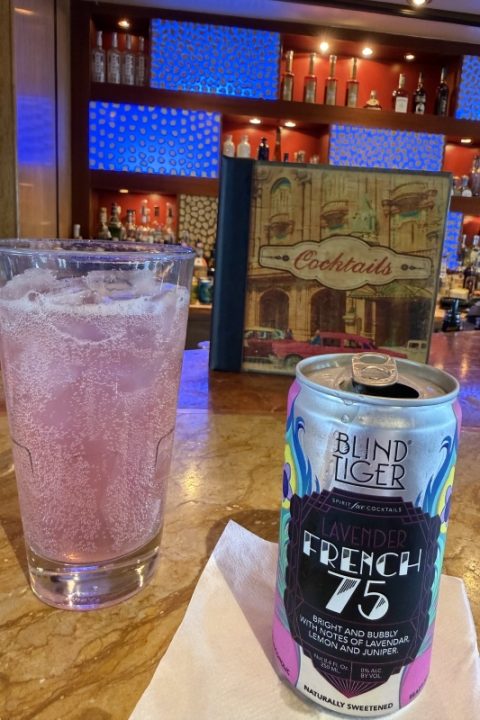
This cocktail with notes of lavender, cherry, lemon and juniper, was inspired by the original French 75, a Prohibition-era drink so potent it was said to pack the punch of a 75mm French field gun.
Their raw ingredients are sourced in the USA and all products come in 8 or 8.4 oz cans. Furthermore, the long shelf life of their products – two years – is convenient for cruise lines as they don’t need to worry so much about expiration dates.
Their products are positioned as sparkling mocktails on the menus of a few bars on each ship.
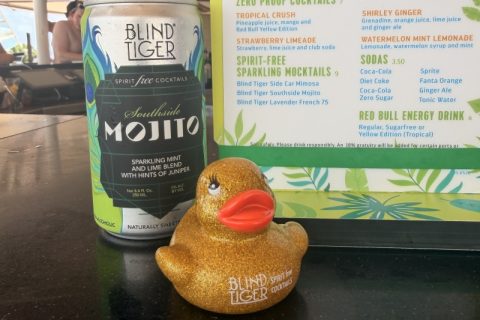
Styn admitted that advertising aboard is a bit challenging, but they did manage to find some creative ways to overcome this. One example was brand ambassadors placing rubber ducks with the Blind Tiger logo on them around the ship for guests to find.
“It’s just not your typical outlet to advertise. We are on printed menus, but not all of them, so it ultimately depends on the consumer. Typically, when they’re actively looking for non-alcoholic options, they’ll know to look for us,” added Styn.
From Contract to Ship
Getting in the cruise industry supply chain piqued Styn’s interest because high-volume establishments such as cruise ships are looking for easy options, a box their pre-packaged products tick.
On top of that, she notes that their drinks are meant to be served in a sophisticated martini or coupe glass, making them perfect for sunset cocktails on deck.
On getting the contracts, Styn explained that with Virgin, it was just outreach to the buyer multiple times, while Royal Caribbean was doing a review at the time the company connected with them.
“It was a very exciting opportunity for us, but it was not overly difficult once you can get into the review process. They either love it or hate it.”
As for distribution, the company uses Apollo for Royal Caribbean and Virgin. Since ingredients are sourced in the U.S. and shipped domestically, Styn described the process as fairly easy.
Disney was more complicated as it included exporting the product overseas, which took 30 days, and using a foreign distributor.
Contributing to this is the fact that non-alcoholic beverages don’t require licenses that alcoholic ones do, so they can ship anywhere in the U.S. and not have to have a license there.
Looking ahead, Styn doesn’t expect non-alcoholic options to replace alcohol entirely – nor does she think they should.
She does think that the trend will continue increasing for alternatives as alcohol-free beverages become a complement to traditional cocktail programs rather than a replacement.
“The thing with alcohol is oftentimes it’s the ritual more than the alcohol itself,” she said. “If you’re out, particularly on cruises, in hotels, in tourism venues, you’re enjoying celebratory moments. The non-alcoholic options allow you to enjoy the ritual of a drink without necessarily the aftereffects of a drink.”