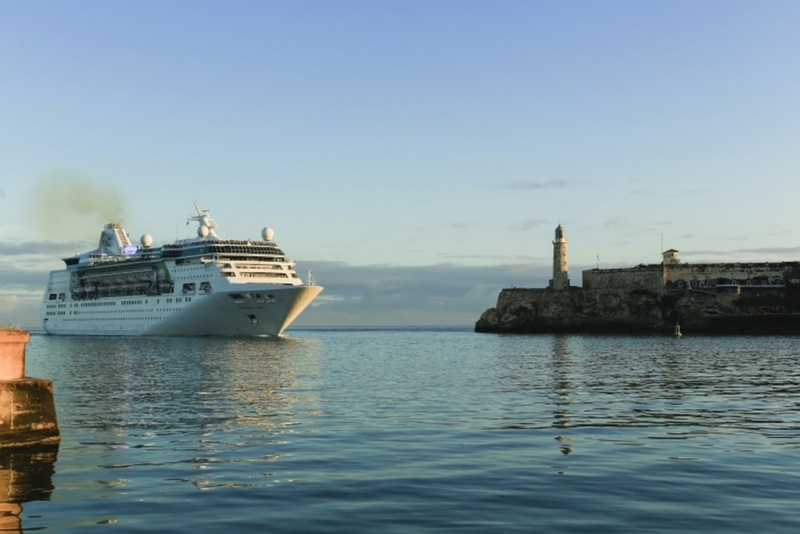
The U.S. Supreme Court has ruled 8-1 for Plaintiff, Havana Docks Corporation, in a $440 million lawsuit against four key cruise operators.
“We conclude that the cruise lines used confiscated property to which Havana Docks owns the claim. Because the Court of Appeals concluded otherwise, it did not reach the cruise lines’ remaining arguments against liability,” the court wrote in its opinion.
The justices set aside a lower court’s decision to throw out the judgments against Carnival Corporation, Royal Caribbean Group, Norwegian Cruise Line Holdings and MSC Cruises.
In short, the cruise companies were sued by a U.S. company, Havana Docks Corporation, that had built the port before the Cuban revolution.
Havana docks sued on the basis that the companies used its port facility between 2016 and 2019, transporting nearly a million paying passengers to Cuba.
The port had been confiscated by the Cuban government on or after January 1, 1959, thus making it eligible to sue under the Helms-Burton Act, a 1996 law that lets U.S. nationals who owned property in Cuba sue anyone who traffics in property which was confiscated by the Cuban government.
Havana Docks alleged that the lines paid Cuban state-affiliated entities tens of millions of dollars and generated hundreds of millions in revenue. They knew about Havana Docks’ certified claim and docked there anyway, according to the ruling.
A federal district court previously sided with Havana Docks, awarding over $100 million from each cruise line. The Eleventh Circuit reversed, reasoning that since Havana Docks’ concession would have expired in 2004 anyway, the cruise lines couldn’t have “trafficked” in something that no longer existed.
On May 21, 2026, the Supreme Court disagreed: 8 to 1. Writing for the majority, Justice Thomas held that the confiscated docks themselves. not just Havana Docks’ interest in them, are “property which was confiscated,” and anyone commercially using that tainted property is liable. The case was vacated and sent back to the Eleventh Circuit.
Justice Kagan dissented, arguing the majority effectively converted a time-limited lease into a perpetual property right, and opened the door to potentially limitless recoveries.