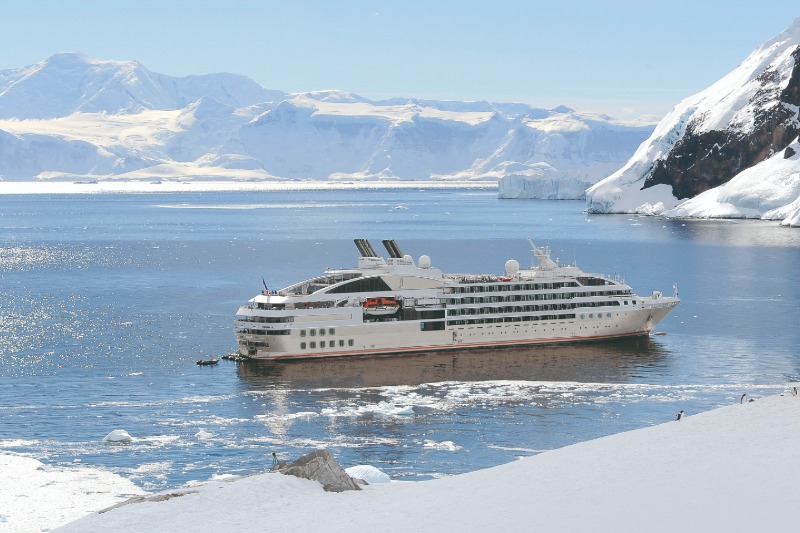
Creating the ideal deployment is one of the biggest challenges for an expedition cruise line, according to Belinda Hindmarsh, Deputy Chief Executive Officer of Global Business for Ponant Explorations Group.
“The complexity in building a fleet deployment is not to be underestimated,” she said.
Deployment can either make or break a year from a commercial perspective, she said.
According to Hindmarsh, balancing customer demand, maritime navigation, regulatory permissions and local community engagement is paramount.
Ponant has exploration ingrained in its DNA, which drives a purposeful approach to ship deployment in delicate destinations, she added.
The company, however, will withdraw from certain itineraries if conditions are not right.
“We do say no sometimes if we think there are places that are too populous or we just don’t think we’re going to have the right impact,” she explained.
“And it has to be a multi-year commitment. We don’t go somewhere unless we intend to stay for a long time,” she said.
“We have our destination experts and our R&D team who go in there and make sure years in advance that that’s somewhere we want to be, that we believe we can stay and that we are really committed to building a relationship with.”
As operators focus on authentic, destination-driven experiences, Hindmarsh questioned whether the current industry classifications accurately reflect the expedition product.
Hindmarsh said brands like Ponant are typically grouped as luxury operators along with other brands that do not offer exploration products.
“There’s almost a divergence where you see all of the hospitality going to sea, and that’s much more what you would call [a traditional luxury] cruise. It’s about making money onboard. It’s not about the destination per se,” she said.
According to Hindmarsh, exploration is the company’s North Star and guides every decision.
“We say exploration in everything for everyone, everywhere. And so if an idea or concept doesn’t fit within that North Star around exploration, then it won’t come to life.”
Addressing innovation within the expedition industry, Hindmarsh highlighted the company’s “Swap to Zero” project, an initiative aimed at building a near-zero emission ship that recently received funding from the European Union.
While ship design and hardware are rapidly evolving, she identified alternative fuels as the most significant hurdle facing the industry.
“The ships that we’ll see in the future will look very different,” Hindmarsh said. “But what’s going to be a big barrier for us all to overcome is renewable energies and new energy sources to fuel and power these vessels.”
Echoing calls from other industry representatives, Hindmarsh stressed that the expedition niche must figure out how to make these new fuels accessible, scalable, and cost-efficient to overcome current operational challenges.
“There’s great innovation in ship design and shipbuilding, but there’s a lot more to do around how we’re going to power them,” she added.