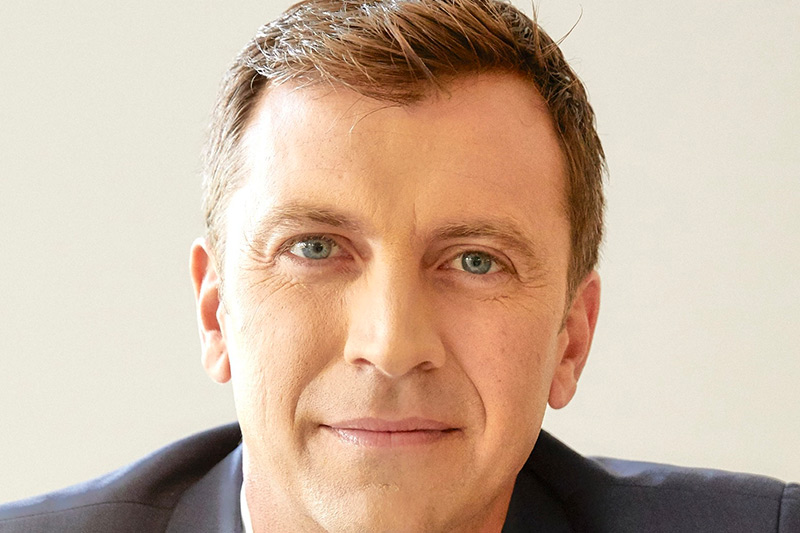
Gregory Lanter took the helm at Cruise Terminals International in January with a company that is scaling fast across three continents and a conviction that cruise terminals have changed roles in the guest’s journey.
The former Club Med deputy chief executive officer joined CTI as the Miami-based developer operates one terminal and advances four major projects representing nearly $1.3 billion in active investment, with over $2 billion more in pipeline opportunities being evaluated.
“2026 is a defining year for CTI but in many ways, it’s just the beginning for us,” Lanter said. “We built the company from day one as a scalable platform, not as a single-project developer.”
CTI currently operates Miami Terminal A, the flagship facility welcoming over 160,000 passengers monthly.
The company also has four additional projects under development.
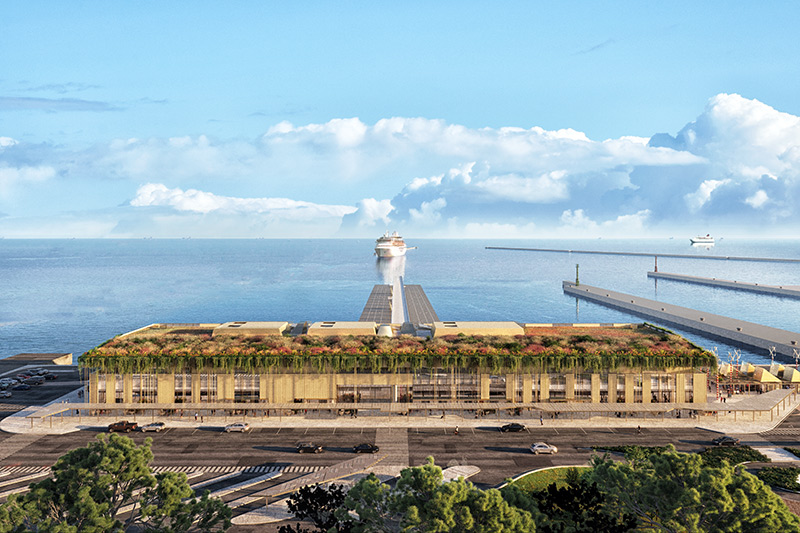
Ravenna Civitas Cruise Port in Italy is opening this year. Barcelona’s Catalonia Cruise Terminal G is scheduled for April 2027 and then there is the Rome Fiumicino Waterfront Project and Crown Bay in St. Thomas, U.S. Virgin Islands.
The expansion demands coordination across design, construction, finance and operations in markets with many different regulatory frameworks, stakeholder configurations and community expectations.
“What makes CTI different is the way we’ve structured the organization,” Lanter said.
“We’ve brought together cruise industry veterans, infrastructure financiers, construction experts and hospitality specialists because terminals today sit at the intersection of all these worlds.”
Managing simultaneous projects across continents requires what Lanter calls a simple model which is a strong central platform that ensures consistency combined with empowered local teams understanding each different market.
The company has grown from just five employees at its formation in 2023 to over 50 team members today, supported by approximately 400 professionals working on projects worldwide.
“As we develop more destinations, the better we have become,” Lanter said. “We are already seeing enormous compounding benefits in procurement, in design standardization and in operational playbooks. Each project we undertake just strengthens the next.”
Structural Gaps Drive Pipeline
The $2 billion pipeline reflects what Lanter describes as a fundamental imbalance in the cruise industry where ships have evolved dramatically but terminals aren’t keeping pace.
“For years, land infrastructure has been seriously underinvested in, and as a result, it is now lagging behind both in capacity and in quality of experience,” he said. “That gap is not incremental, it’s structural.”
CTI sees demand coming from two directions.
Mature markets need to modernize and expand to accommodate larger ships and higher guest expectations.
Emerging destinations want to position themselves on the global cruise map with infrastructure designed for contemporary operations from the start.
The company is building scale across the Americas and Mediterranean, two regions with strong fundamentals, before then expanding further into other cruise markets.
“We are highly selective,” Lanter said. “We prioritize projects where complexity is high because that’s where CTI creates the most value.”
The pipeline includes opportunities for upgrading existing assets not designed for today’s ships and developing entirely new destinations planned with sustainability integrated from inception rather than retrofitted later.
Geographic focus also remains disciplined with CTI evaluating projects based on whether they address capacity constraints in established markets or open access to destinations lacking modern cruise infrastructure.
Beyond Transit Points
Lanter’s philosophy marks a departure from decades of cruise terminals treated as pure infrastructure.
“That model is over,” he said. “A cruise terminal is the first and last impression of the journey and increasingly, it’s a destination in itself.”
“A terminal should not be a closed box that only opens when a ship arrives,” Lanter said.
Crown Bay in St. Thomas is being designed as an environment integrating with the local community, active in evenings and off-season, accessible to residents and land-based tourists.
Barcelona Terminal G incorporates local identity into its architecture, materials and artistic expression while developing collaborations with schools and marine research organizations to ensure the terminal contributes to the local ecosystem year-round.
The Barcelona project targets LEED Platinum certification and is designed to produce more energy than it consumes.
“We are not treating sustainability as a constraint but as a leadership opportunity,” Lanter said.
This shift from infrastructure to ‘experience’ also creates additional revenue opportunities beyond traditional dockage and passenger fees.
Mixed-use programming, retail partnerships, food and beverage operations and community events are there to generate income streams that will support terminal economics while serving local populations.
Navigating Partnership Models
CTI’s projects span different ownership and partnership structures across regulatory environments.
“What defines CTI is our ability to operate across very different environments and to make complexity work,” Lanter said.
“You need strong anchor partners and Royal Caribbean provides that industrial backbone for us,” he said.
“You need independent, long-term capital and that’s what iCON Infrastructure brings. And you need operational neutrality because to create value, you must serve all cruise lines with the same level of excellence.”
That balance sits at the core of CTI’s model.
The company positions itself as building platforms for the entire cruise industry rather than terminals for a single operator.
“We are excited about the future and look forward to collaborating with partners around the world,” Lanter said.
Ravenna opens this summer serving multiple cruise lines, demonstrating the operational neutrality CTI emphasizes.
Crown Bay will follow shortly after with similar multi-client operations.