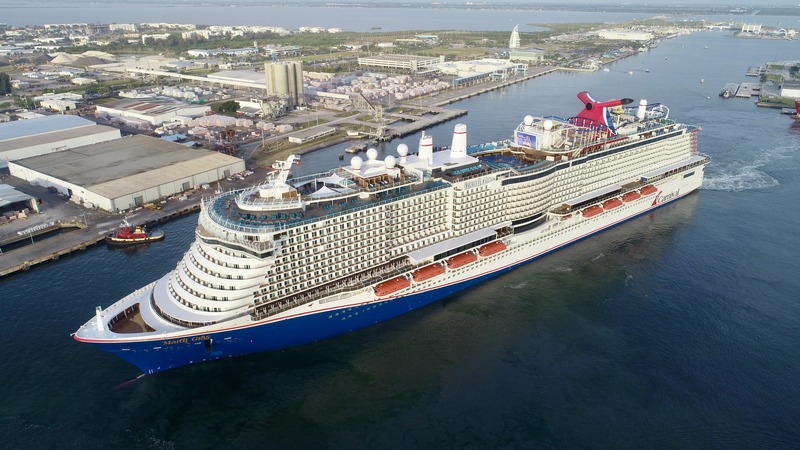
The global cruise fleet is set to grow to around at least 540 ships by 2037, from a fleet of 459 ships at the start of 2026, according to the 2026 Cruise Industry News Annual Report.
That also means that the passenger capacity grows from about 36 million at the start of this year to nearly 50 million over the next 10 years.
Based on the current orderbook, the biggest capacity increases will come this year, with a 9 percent increase in passengers, followed by 5 percent in 2027, 4 percent in 2028 and 3 percent in 2029, 2030, 2031 and 2033, after which it tapers off. Moreover, as the industry base capacity grow, the annual percentage increases will be smaller, but the actual passenger increases are still significant.
Thirteen new ships will be entering service this year representing building contracts estimated at more than $9.5 billion. The contract value translates into a per berth building cost of more than $350,000.
The average tonnage of the new ships this year is 94,307, ranging from 250,800 tons for the Legend of the Seas, being built by Meyer Turku for Royal Caribbean, to 590 tons for the Magellan Discoverer, an expedition ship for Antarctica21.
The average passenger capacity is 2,085 across all the ships, topped by 5,610 for the Legend of the Seas and 5,400 for the MSC World Asia being built at Chantiers de l’Atlantique.
Breaking down by market segment, in 2026, 22,841 of the new berths go into the contemporary market, 4,166 into the luxury segment, and 100 berths to the expedition market.