API has signed another agreement (with a 10-year framework) with Fincantieri, which covers 23 vessels, deepening the Italian marine flooring specialist’s relationship that stretches back through multiple project cycles and hundreds of cruise ships since 1958.
“This is our third framework agreement,” said Veno Cravino, managing director at API.
“From a strategic standpoint, both parties, we just share aligned objectives.
“Fincantieri seeks, like we do, to stabilize the supply chain by relying on proven, high-performance partners capable of delivering consistently across multiple ship programs.”
The agreement spans deliveries from the winter of 2026 to the summer of 2036. It provides API with long-term visibility for project-based industries where scheduling can get really complex.
Securing this pipeline of 23 vessels over a decade, also allows API to now structure its industrial planning across three areas.

It gives API security in its production footprint at its facilities and prefabrication department, more research and development time, as well as workforce development, including recruitment, training and retention of its specialized project managers and installation teams.
The partnership reflects just how suppliers and shipbuilders are rethinking their relationships in an industry where multi-year backlogs have become standard and where coordinating hundreds of specialized trades demands predictability.
The company has supplied marine flooring solutions to more than 400 passenger ships since its founding and it has also watched as technical requirements have shifted.
There have been changes in fire safety regulations, a tightening of acoustic performance standards, sustainability becoming a non-negotiable and overall aesthetic customization intensifying.
“Marine flooring has evolved from a purely functional component into a system that combines technical performance, safety and design,” Cravino said.
“Today, cruise ships are very complex hospitality environments, and flooring plays an incredible key role in defining all your onboard aesthetics, with the highest degree of customization and increasingly we’re just creating more sophisticated finishes.”
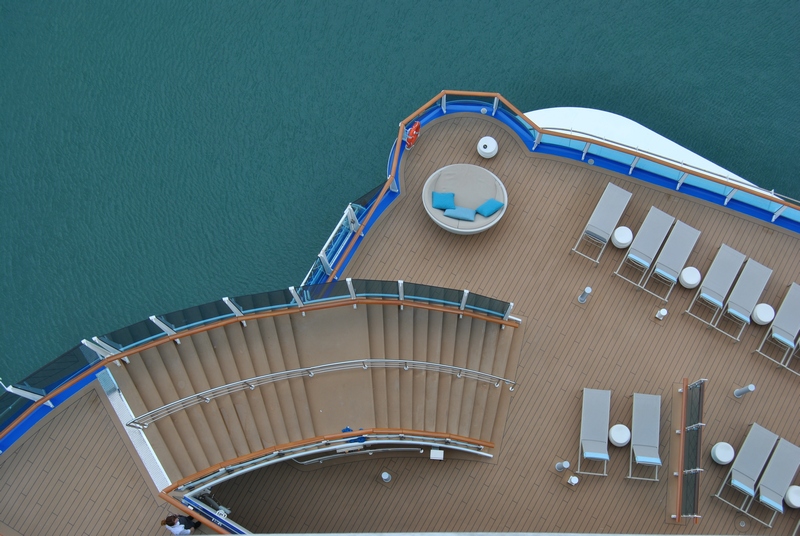
For example, API’s Burmateak replicates the look and tactile feel of natural teak with what the company describes as a high level of realism.
The product appeals to more luxury brands seeking the aesthetic of teak without all the heavy weight, the maintenance demands or especially the environmental concerns that come with harvesting tropical hardwood.
Another product, Decoro Riflesso, creates what Cravino calls a captivating interplay of light and reflections in theaters and nightclubs.
This type of flooring integrates modern LED solutions that allow more progressive designers and architects to create a multitude of color schemes that are suited to ultra-luxury areas and onboard safety requirements.
Beyond aesthetics, though, API supplies heated flooring systems, especially for vessels operating in the polar regions.
In addition, the company’s LH Cool-Teak uses reflective polymers to reduce temperature by up to eight degrees Celsius compared to traditional resin flooring.
The product also addresses another practical problem for sun-exposed decks where surface temperatures can climb uncomfortably high.
Even ultra-luxury operators are rethinking materials that once seemed non-negotiable.
Natural teak may carry aesthetic prestige, but synthetic alternatives on the market now can deliver comparable looks with as many superior performance characteristics and fewer sustainability concerns.
Miami serves as a strategic commercial hub for relationships with major cruise operators, while a Shanghai office functions as a fully operational base that enables the company to approach the Chinese market with local execution capability.
“Shanghai is now a true gateway, capable of opening all the doors to the entire Southeast Asian market,” Cravino commented.
Europe remains a mature environment for cruise shipbuilding, while Asia, particularly China, now offers the most significant growth opportunities in the coming years.
“We maintain our Made in Italy positioning not as a geographic label, but as a standard of engineering quality, design capability and execution excellence,” Cravino said.
“This combination allows us to operate effectively in a global industry where strategic direction is centralized but delivery, of course, must always be local, whenever possible.”