As luxury hotel brands continue to enter the cruise industry, Aman at Sea is betting on a philosophy of “quiet luxury” and exclusivity to differentiate its product.
According to President and Chief Executive Officer Jonathan Wilson, the brand’s transition to the ocean relies heavily on replicating its signature state of mind rather than simply building premium hardware.
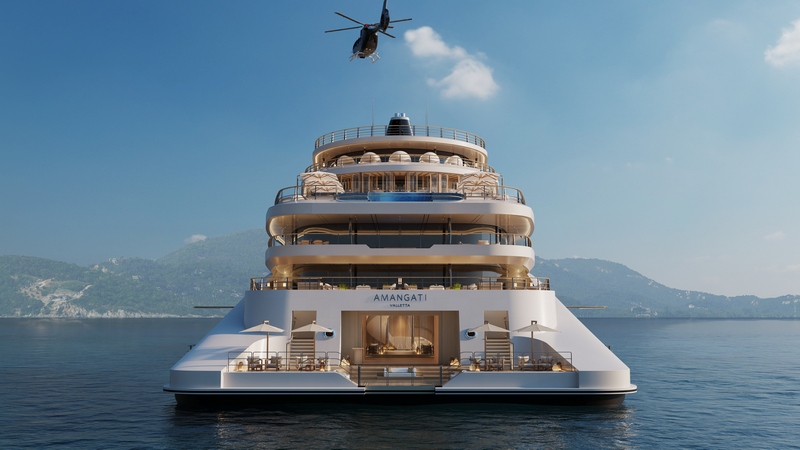
Currently under construction in Italy, the brand’s first ship, the Amangati, will enter service ahead of the 2027 summer season.
Defining this new product starts with recognizing that passenger expectations are highly subjective and constantly shifting, Wilson explained.
“There is no single definition for luxury. It definitely changes from person to person,” he explained, noting that the word itself is ambiguous.
“It’s so hard to define it because the spectrum has grown so broad,” he continued. “It just simply comes down to what the guest feels is value or feels is luxury.”
To deliver that value, Aman is prioritizing the atmosphere and feel of the 94-passenger vessel.
“The hardware is the easier part. You design it and invest in it, and you end up with really beautiful spas. But at least for Aman, it is much more a state of mind,” he said.
While the upcoming vessel will feature individual spa treatment rooms equipped with private balconies and whirlpools, the core product is built on the brand’s ethos.
Noting that the word Aman translates to peace, Wilson said the company is focused on delivering a serene environment devoid of traditional, high-energy cruise activities.
“It is very important to our guests that they have quiet luxury, that they have what we’ve been calling ‘soft travel,’” he added, pointing to longer stays in port, slower voyage speeds and highly spacious venues.
The goal is to provide passengers with the time and space to relax, including environments where guests can comfortably be “socially alone,” Wilson continued.
“You want to be in an environment with other people, but you don’t necessarily want to speak to them,” he explained.
“It is very much the ethos of Aman to have the right space, peace of mind, serenity, sanctuary and calm. You would not compare us to a product where there’s high entertainment, a lot of activity, loud or fast.”
Beyond the onboard atmosphere, this approach dictates the brand’s deployment strategy. Wilson noted that Aman currently operates 15 land-based properties located in or adjacent to UNESCO World Heritage sites.
To mirror this operational standard on the water, the Amangati will visit 35 UNESCO sites during its inaugural season in the Mediterranean.
While the brand eventually aims to expand its footprint to other regions of the world, Wilson said that future orders will be strictly controlled to preserve exclusivity.
“We would love to see organic, sensible growth. We’re not going to build 90 resorts in the Mediterranean. We’re also not going to build 90 in the Americas or 90 in the South Pacific,” he said.
However, adding more vessels to the fleet in the future makes economic sense and would facilitate diverse global itineraries, he said.
“It makes sense economically to have organic growth, but it will be mindful and it will be measured, which follows the spirit of Aman,” he added.
Commenting on the rapid influx of hotel brands launching yachts, Wilson welcomed the competition as a necessary evolution for the ultra-luxury travel market.
“We’ve seen this explosion in our space because there were zero, and now there are four or five very new hotel brands,” he said.
“I wouldn’t want to be a category of one. We need the segmentation of the category. We need it to create price points and some structure,” he continued.
“I think it’s really important for this new category that we have the level of great brands all working together. It makes a lot of sense for the industry.”