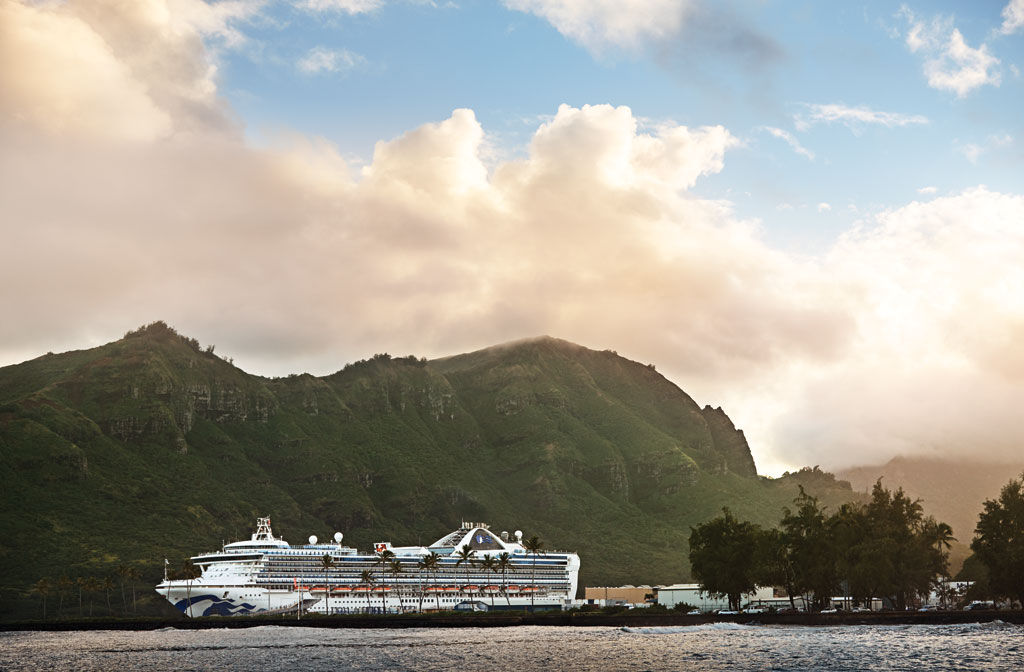
The Hawaiian Department of Transportation is planning to significantly reduce cruise ship visits in an effort to cut the state’s carbon emissions.
The measure is part of Hawaii’s Energy Security and Waste Reduction Plan, which is available online and aims to slash emissions by 75 percent by 2035.
To reach the goal, the local government is planning to implement a series of actions, including cuts to the current cruise activity on the islands.
Using 2023 numbers as a reference, the plan calls for a 50 percent reduction in the number of cruise calls by 2030, followed by a 75 percent reduction by 2035.
A special focus will be given to limiting the number of ships arriving in the state with over 3,000 passengers.
Hawaii’s plan notes that the state is heavily reliant on imported goods and that cargo shipments are essential for economic stability. However, cruise ship activity is said to present an opportunity for emission reductions within the marine environment.
“Unlike cargo vessels, cruise ships primarily serve tourism and, while they contribute to the economy, they do not necessarily enhance core economic sectors such as hotels, domestic air travel, or local services,” the Department of Transportation added.
Reducing the number of cruise ships visiting Hawaii’s ports “could result in substantial environmental co-benefits, as well as emissions reductions,” the government noted.
The strategy will reduce marine sector emissions while enhancing local air and water quality in the archipelago, the state added.
Other advantages are said to include a lessening of the environmental and social impacts of large-scale cruise tourism.
The plan calls for the Hawaiian Department of Transportation to implement regulations limiting both the number of calls and the size of cruise ships visiting Hawaii.
Cruise lines, local businesses, stevedores, ground transportation providers and affected communities will be consulted during the process.
The plan also calls for the state to promote visits from smaller vessels, which are said to be more efficient than the ships that carry over 3,000 guests.
However, the indirect economic impacts of the strategy “must be carefully examined,” the state noted.
“Hawaii’s economy relies heavily on tourism and reducing cruise ship visits could impact local businesses that depend on cruise passengers for revenue, such as tour operators, restaurants and retail shops near port areas,” the document added.
A detailed analysis is needed to assess how changes in cruise ship arrivals could affect jobs, local businesses and tax revenue.
“In addition, because many large cruise lines are foreign-owned, a reduction in cruise activity may not significantly impact Hawaii’s broader economy if visitors opt for alternative tourism options,” the plan added.
As part of the new program, Hawaii’s Department of Transportation also aims to develop the infrastructure and supply chain for bio and renewable LNG while planning for a long-term shift to alternative clean fuels, such as green methanol and green ammonia.
Hawaii wants to require all cruise ships visiting commercial ports, except for homeported vessels, to operate on low- or zero-emission fuels.